Mica pigment and pearlescent pigment are widely used in automotive coatings, cosmetics, plastics, printing inks, and decorative finishes. Although the two terms are often used interchangeably, they refer to different materials and functions. Understanding the difference is important when selecting pigments for color development, surface appearance, and product performance.
Mica is a mineral or pigment substrate, while pearlescent pigment is an effect pigment designed to create pearl-like luster, shimmer, metallic reflection, or interference colors. Many pearlescent pigments are manufactured by coating mica flakes with titanium dioxide, iron oxide, or other metal oxides to achieve specific optical effects.
For manufacturers, formulators, and pigment distributors, understanding how mica pigment differs from pearlescent pigment helps identify the right material for the intended application, appearance, and processing requirements.
What Is Mica Pigment?
Mica is a naturally occurring silicate mineral characterized by its layered structure and ability to split into thin, flexible flakes. In the pigment industry, mica is processed into fine particles or flakes for use in decorative products, coatings, cosmetics, plastics, and other formulations.
Natural mica is valued for its reflective properties, heat resistance, and chemical stability in suitable applications. Synthetic mica, produced under controlled manufacturing conditions, offers more consistent purity and can provide improved transparency and brightness in certain pigment applications.
Mica powder may be used directly to provide subtle shimmer or texture. It can also serve as a substrate for producing coated effect pigments. When mica flakes are coated with metal oxides, their optical properties change, allowing manufacturers to create a wide range of pearlescent colors and effects.
Common characteristics of mica pigment include:
- Thin, plate-like particle structure
- Natural or synthetic mineral composition
- Reflective surface and subtle shimmer
- Good thermal stability in suitable grades
- Available in different particle sizes
- Can be used as a substrate for coated effect pigments
For industrial buyers, mica pigment is not simply a colorant. Its particle structure can influence surface appearance, texture, reflection, and formulation performance.
Explore mica-based pearlescent pigment products to compare different pigment grades and optical effects for industrial and decorative applications.
What Is Pearlescent Pigment?
Pearlescent pigment is a special effect pigment that creates a pearl-like appearance through light reflection, refraction, and interference. Unlike conventional pigments that primarily absorb and reflect light to produce a solid color, pearlescent pigments can create depth, directional reflection, and changing visual effects depending on the viewing angle.
Many pearlescent pigments use mica flakes coated with titanium dioxide or iron oxide. The coating thickness, refractive index, and particle size determine the final optical effect. Different coating structures can produce silver-white, gold, bronze, red, violet, blue, green, and other interference colors.
Not all pearlescent pigments are mica-based. Some products use synthetic mica, glass flakes, calcium aluminum borosilicate, or other substrates to achieve enhanced brightness, transparency, sparkle, or special visual effects.
Common pearlescent pigment effects include:
- Silver-white pearl effect
- Gold and metallic luster
- Interference colors
- Color-shifting effects
- Soft satin shimmer
- High sparkle and glitter-like reflection
For applications requiring color changes or iridescence, interference pearlescent pigments can provide optical effects that conventional mica powder cannot achieve on its own.
Mica Pigment vs Pearlescent Pigment: Key Differences
The main difference between mica pigment and pearlescent pigment lies in their definition, composition, and optical performance. Mica describes a mineral material or substrate, whereas pearlescent pigment describes a functional effect pigment.
| Comparison |
Mica Pigment |
Pearlescent Pigment |
| Definition |
Mineral material or pigment substrate |
Effect pigment designed to produce optical effects |
| Composition |
Natural or synthetic mica |
Mica, synthetic mica, glass flakes, or other substrates with optical coatings |
| Surface coating |
May be untreated or surface-modified |
Usually coated with metal oxides or other functional layers |
| Visual appearance |
Subtle shimmer, reflective texture, or mineral appearance |
Pearl luster, metallic reflection, interference, or sparkle |
| Color range |
Natural mineral tones or processed colors |
Silver, gold, bronze, colored pearl, and color-shifting effects |
| Particle size |
Available in different powder and flake sizes |
Particle size is selected according to brightness, sparkle, and finish |
| Applications |
Cosmetics, crafts, coatings, plastics, and decorative products |
Automotive coatings, cosmetics, plastics, printing inks, paints, and packaging |
In practical terms, mica can be the base material used to manufacture pearlescent pigment. However, pearlescent pigment is defined by the optical effect it produces and may use substrates other than mica.
How Do Mica-Based Pearlescent Pigments Create Color?
Pearlescent pigments create color through the interaction of light with thin flakes and their coating layers. When light strikes a pigment particle, some light is reflected from different interfaces within the structure. These reflected light waves interact with each other, producing brightness, interference colors, and optical depth.
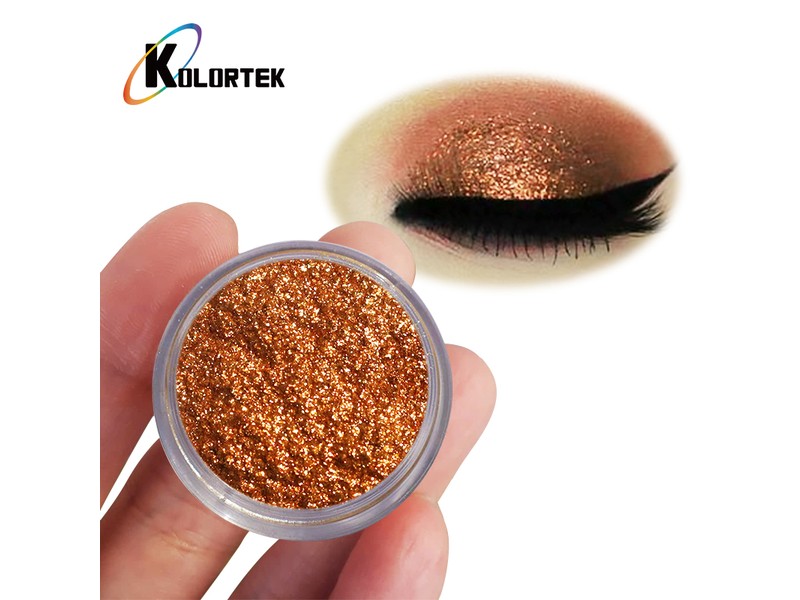
For example, titanium dioxide-coated mica can produce silver-white pearl effects. Changes in coating thickness can create gold, red, violet, blue, or green interference colors. Iron oxide coatings may provide warmer metallic tones, including bronze, copper, and reddish-brown effects.
The optical performance also depends on the particle size and shape. Fine particles typically produce a smooth, satin-like finish with soft reflection. Larger flakes generate stronger sparkle and more visible directional reflection.
For pigment formulators, the final appearance depends on several factors working together:
- Substrate type and transparency
- Metal oxide coating composition
- Coating thickness
- Particle size distribution
- Pigment concentration
- Binder or resin system
- Application method and particle orientation
These factors explain why two pearlescent pigments with similar color descriptions can produce noticeably different finishes in the same formulation.
Natural Mica vs Synthetic Mica
Natural mica and synthetic mica are both used in pearlescent pigment manufacturing. Their differences can influence purity, transparency, brightness, consistency, and the overall appearance of the finished pigment.
| Property |
Natural Mica |
Synthetic Mica |
| Source |
Naturally mined mineral |
Manufactured under controlled conditions |
| Composition |
May contain natural mineral variations |
Controlled composition and typically higher purity |
| Transparency |
Depends on mineral quality and grade |
Often offers high transparency in suitable grades |
| Appearance |
Natural pearl and shimmer effects |
Can provide brighter, cleaner, or more vivid optical effects |
| Cost |
Often economical for standard applications |
May have a higher cost depending on grade and manufacturing process |
| Typical selection |
General industrial and decorative applications |
Premium effects and applications requiring high purity or clarity |
Natural mica-based pigments are often suitable for standard decorative and industrial applications where cost and appearance need to be balanced. Synthetic mica-based pigments may be preferred when higher transparency, brightness, or a cleaner visual effect is required.
For buyers comparing different pearl finishes, silver-white pearlescent pigments offer a useful starting point for evaluating brightness, particle size, and substrate differences.
Which Pigment Is Better for Different Applications?
Neither mica pigment nor pearlescent pigment is universally better. The correct choice depends on the finished product, formulation, processing conditions, and desired appearance.
Automotive Paints and Industrial Coatings
Pearlescent pigments are widely used in automotive paints, decorative coatings, and industrial finishes to create pearl luster, metallic reflection, color depth, and special visual effects.
Fine particles can produce a smooth, uniform finish, while larger flakes provide stronger sparkle and directional reflection. Interference pigments are particularly useful for automotive finishes that change color or brightness depending on the viewing angle.
For coating formulators, pigment selection should consider particle orientation, dispersion, binder compatibility, coating thickness, and the color of the underlying surface.
View pearlescent pigments for paints and coatings to compare effect pigment options for decorative and industrial coating applications.
Cosmetics and Personal Care
Mica-based pigments are commonly used in eyeshadow, highlighter, body shimmer, nail products, and decorative cosmetics. Fine pearlescent pigments provide a smooth satin finish, while larger particles create a more noticeable sparkle.
Cosmetic formulations require careful selection of pigment grade, purity, ingredient compliance, and intended application. A pigment designed for industrial coatings should not automatically be considered suitable for cosmetic use.
For cosmetic manufacturers, cosmetic pearlescent pigments are available in different colors and optical effects for makeup and personal care product development.
Plastics and Injection-Molded Products
Mica and pearlescent pigments can be incorporated into plastics to create decorative housings, packaging, automotive interior components, consumer products, and molded parts with premium visual finishes.
In plastic applications, pigment selection should consider polymer compatibility, processing temperature, shear conditions, dispersion, particle size, and the required surface appearance.
Larger flakes may create stronger sparkle but can also influence surface smoothness or processing performance in some formulations. Testing the pigment in the actual resin system is recommended before production.
Printing Inks and Packaging
Pearlescent pigments are used in printing inks for labels, decorative packaging, promotional materials, and specialty printed products. They can add visual depth, subtle shimmer, metallic-like reflection, and premium appearance to printed surfaces.
Fine particle grades are generally preferred when print resolution and smoothness are important. Larger particles may provide stronger sparkle, depending on the printing process and ink formulation.
Ink viscosity, binder compatibility, pigment particle size, printing method, and substrate should all be evaluated to achieve consistent printing performance.
How to Choose the Right Mica or Pearlescent Pigment
When sourcing pigments for a new product or production line, buyers should consider more than the basic color description. The following factors can help narrow down the appropriate grade.
- Desired visual effect: Determine whether the finish should be silver pearl, gold, metallic, interference, multicolor, satin, or high sparkle.
- Particle size: Fine particles typically produce smoother finishes, while larger particles provide stronger sparkle.
- Substrate type: Choose natural mica, synthetic mica, glass flakes, or other substrates according to performance and appearance requirements.
- Application compatibility: Confirm compatibility with the coating, resin, plastic, ink, or cosmetic formulation.
- Processing conditions: Evaluate temperature, shear, dispersion, curing, and application methods.
- Regulatory requirements: For cosmetics and other regulated applications, verify the exact grade, documentation, and permitted use.
- Sample testing: Test the pigment in the actual formulation and on the intended substrate before approving mass production.
Requesting pigment samples and technical data sheets is often the most reliable way to compare different grades. A pigment's appearance in dry powder may differ significantly after dispersion, application, curing, or molding.
Why Choose Kolortek for Mica and Pearlescent Pigments?
Kolortek supplies effect pigments for customers in coatings, cosmetics, plastics, printing inks, and decorative product industries. Its product portfolio includes silver-white, interference, gold, metal luster, multicolor, chameleon, and other special effect pigment categories.
For manufacturers and distributors, choosing the right pigment involves more than selecting a color. Particle size, substrate, optical performance, formulation compatibility, and application requirements all affect the final result.
Whether you are sourcing mica pigment for decorative applications or pearlescent pigment for automotive coatings, cosmetics, plastics, or printing, selecting the appropriate grade is essential for achieving consistent color and finish.
If you are developing a new formulation or comparing pigment specifications, contact Kolortek to discuss your application and request pigment samples.
Frequently Asked Questions
Is mica pigment the same as pearlescent pigment?
No. Mica is a mineral substrate or material, while pearlescent pigment is an effect pigment designed to create pearl-like reflection, shimmer, or interference colors. Many pearlescent pigments use mica as their substrate.
Is pearlescent pigment always made from mica?
No. Although mica is a common substrate, pearlescent pigments can also be made using synthetic mica, borosilicate glass flakes, and other substrates with suitable optical coatings.
What is the difference between mica powder and pearl powder?
Mica powder generally refers to mica material in powder or flake form. Pearl powder or pearlescent pigment usually refers to a pigment that creates a pearl-like optical effect. In commercial pigment markets, the terms may overlap when the pearlescent pigment is mica-based.
Which pigment is better for automotive paint?
Pearlescent pigments are generally preferred when the goal is pearl luster, color depth, metallic-like reflection, or interference color. The appropriate grade depends on the coating system, particle size, desired appearance, and application process.
Can mica-based pearlescent pigments be used in cosmetics?
Yes, certain grades are designed for cosmetic applications. However, cosmetic suitability depends on the exact pigment composition, ingredient specifications, regulatory requirements, and intended area of use. Always verify documentation for the specific grade.
Does particle size affect pearlescent pigment appearance?
Yes. Fine particles generally produce a smoother, softer pearl finish, while larger particles create more visible sparkle and directional reflection. Particle size also affects coverage, surface smoothness, and application performance.
How can I choose the right pearlescent pigment for my product?
Start with the desired optical effect, application system, particle size, substrate, processing conditions, and regulatory requirements. Testing samples in the actual formulation is recommended before placing a bulk order.

 Deutsch
 English
 Français
 Русский
 Español
 Português