Wer beide Substanzen schon einmal in Epoxidharz eingemischt und ihr Verhalten beobachtet hat, weiß, dass sie nicht austauschbar sind. Sie beeinflussen das Harz grundlegend unterschiedlich – sie haben unterschiedliche optische Eigenschaften, ein unterschiedliches Dispersionsverhalten und reagieren unterschiedlich auf UV-Strahlung und Wärme. Die Verwechslung rührt meist daher, dass beide als Pulver geliefert werden und Farbe erzeugen. Damit enden die Gemeinsamkeiten aber auch schon.
Dieser Artikel erläutert die Unterschiede in den für Formulierungsentscheidungen relevanten Begriffen: optische Leistung, Kompatibilität, Lichtechtheit, Partikelverhalten in einer aushärtenden Matrix und was bei Endanwendungen von Kunstharz bis hin zu Epoxidharz-Bodensystemen zu erwarten ist.
Der optische Mechanismus ist nicht derselbe
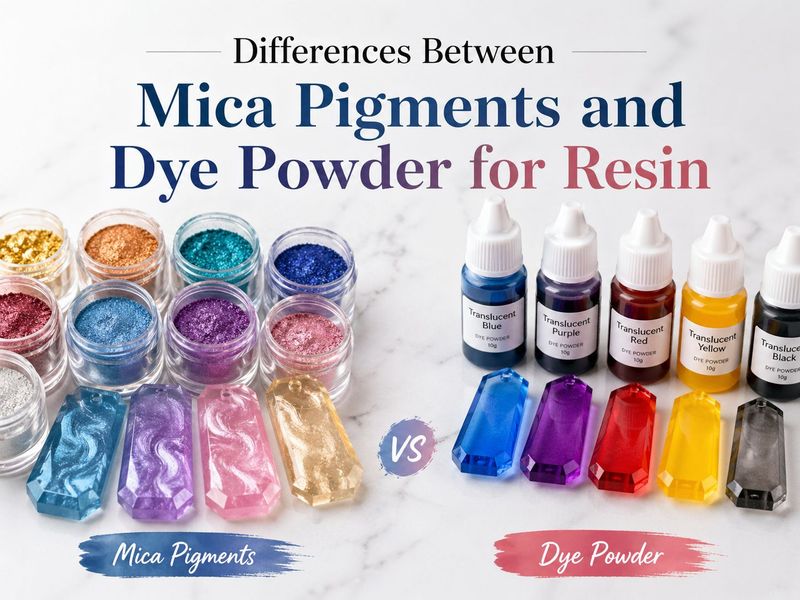
Farbpulver erzeugen Farbe durch selektive Absorption. Ein löslicher Farbstoff löst sich auf molekularer Ebene in der Harzmatrix auf und absorbiert spezifische Wellenlängen, während der Rest durchgelassen wird. Das Ergebnis ist eine klare, oft leuchtende und vollkommen transparente Farbe. Es gibt keine Partikel, die das Licht streuen – der Farbstoff wird Teil des Mediums.
Glimmerpigmente für Harze funktionieren nach einem völlig anderen Prinzip. Der Kern besteht aus einem Muskovit- oder synthetischen Fluorphlogopit-Glimmerplättchen – typischerweise 5–150 µm im Durchmesser und hochgradig fein vermahlen – das mit Metalloxidschichten, meist TiO₂ (Rutil oder Anatas), Fe₂O₃ oder Kombinationen davon, beschichtet ist. Die Farbe entsteht durch optische Interferenz, nicht allein durch Absorption. Wenn Licht durch aufeinanderfolgende transparente Schichten mit unterschiedlichen Brechungsindizes hindurchtritt und reflektiert wird, selektiert konstruktive und destruktive Interferenz bestimmte Wellenlängen. Die wahrgenommene Farbe hängt von der Dicke der TiO₂-Schicht ab, und die Ausrichtung der Plättchen im Substrat bestimmt, wie sich diese Farbe mit dem Betrachtungswinkel verschiebt.
Das ist ein wesentlicher Unterschied. Mit Farbstoffen eingefärbtes Harz sieht aus jedem Blickwinkel gleich aus. Mit Glimmer eingefärbtes Harz hingegen verändert seine Farbe.
Bemerkenswert ist: Da Glimmerplättchen aus einzelnen Partikeln und nicht aus gelösten Molekülen bestehen, streuen und reflektieren sie Licht spiegelnd. Dies erzeugt den „Perlmuttglanz“ oder die metallische Tiefe, die Farbstoffe nicht nachbilden können. Ein roter Farbstoff erzeugt Rot. Mit rotem Eisenoxid beschichteter Glimmer hingegen erzeugt Rot mit Tiefe, Glanz und einer Variation der Helligkeit je nach Blickrichtung.
Dispersionsverhalten in Epoxidsystemen
Farbstoffpulver für Harz – vorausgesetzt, es handelt sich um lösliche Farbstoffe und nicht um als Farbstoffe vermarktete Pigmentdispersionen – lösen sich unter geringer Scherung vollständig auf. Die Farbentwicklung erfolgt sofort und gleichmäßig. Es gibt keine Sedimentation, keine Partikelgrößenkontrolle und kein Risiko von Streifenbildung durch Agglomeration. Für gegossenes Kunstharz, das in dünne Schichten gegossen wird, ist dies ein bedeutender praktischer Vorteil.
Glimmerpigmente erfordern eine echte Dispersion – die mechanische Trennung der Flocken ohne deren Bruch. Starke Scherkräfte beim Mischen, insbesondere bei längerem Betrieb mit hohen Drehzahlen, können die Glimmerplättchen brechen, die Partikelgröße verringern und das für den Glanz verantwortliche Aspektverhältnis zerstören. In der Praxis, insbesondere für künstlerische Anwendungen und Gießereien, ist bei einer Dosierung von 1–5 Gew.-% in der Regel das Mischen von Hand oder ein leichtes mechanisches Rühren ausreichend. Die Flocken benetzen niedrigviskose Epoxidharzsysteme ohne Oberflächenbehandlung recht gut.
Bei hochviskosen Systemen – wie gefüllten Bodenbeschichtungen, Epoxidharzen für Arbeitsplatten und hochkonzentrierten Gießharzen – ist eine gleichmäßige Ausrichtung der Flocken besonders wichtig. Flach und parallel zur Oberfläche liegende Flocken maximieren die Spiegelreflexion. Zufällig ausgerichtete Flocken erzeugen einen diffuseren, weniger brillanten Effekt. Gießtechnik, Viskosität zum Zeitpunkt der Pigmentierung und Aushärtungsgeschwindigkeit beeinflussen dies auf eine Weise, die von der Farbstoffkonzentration allein nicht abhängt.
Ein praktisches Problem, das bei der Verwendung von Glimmerpigmentpulver für Harze immer wieder auftritt, ist die Sedimentation vor der Gelierung. In niedrigviskosen Epoxidharzsystemen mit langen Offenzeiten können gröbere Glimmersorten (D50 über 60–80 µm) sich merklich absetzen, bevor die Matrix geliert. Bei tiefen Güssen oder dicken Gussteilen lässt sich dieses Problem in der Regel durch die Verwendung einer feineren Sorte – D50 im Bereich von 10–30 µm – beheben, ohne dass der Glanz wesentlich beeinträchtigt wird.
Lichtechtheit und Langzeitstabilität
Hier erleiden Farbstoffpulver ihren größten Einbruch.
Die meisten organischen Farbstoffe, die zur Harzfärbung verwendet werden, sind anfällig für UV-bedingten Abbau. Die Photonen spalten die Chromophorbindungen, und die Farbe verblasst – oft ungleichmäßig, was mit der Zeit zu einem ausgebleichten oder veränderten Erscheinungsbild führt. Dies ist anwendungsabhängig: Ein Dekorationsgegenstand, der im Innenbereich und vor direkter Sonneneinstrahlung geschützt aufbewahrt wird, kann seine Farbe jahrelang behalten. Anders verhält es sich bei einer Arbeitsplatte im Außenbereich, einem Fußboden in einem sonnigen Raum oder einem Funktionsteil mit langer Lebensdauer.
Mit TiO₂ und Eisenoxiden beschichtete Glimmerpigmente sind anorganisch. Der Farbmechanismus – Dünnschichtinterferenz und Metalloxidabsorption – basiert nicht auf organischen Bindungen, die durch UV-Strahlung aufgebrochen werden können. Geeignet formulierte Glimmerharzpigmente erreichen Lichtechtheitswerte von 7–8 auf der ISO-Blauwollskala (ISO 105-B02). Dies ist für Anwendungen im Außenbereich und im halboffenen Bereich relevant.
Hierbei ist ein wichtiger Aspekt zu beachten. Manche Glimmerpigmente werden zusätzlich mit organischen Farbstoffen überzogen, um das Farbspektrum zu erweitern und so satte Violett-, Magenta- und andere Farbtöne zu erzielen, die mit rein anorganischen Systemen nur schwer sauber erreicht werden können. Diese Hybridpigmente weisen eine geringere Lichtechtheit auf als rein anorganische Pigmente. Wenn UV-Stabilität unbedingt erforderlich ist, sollten Sie beim Lieferanten nachfragen, ob es sich bei dem jeweiligen Pigment um ein rein anorganisches Pigment handelt oder ob eine organische Modifikatorschicht vorhanden ist. Diese Frage sollte man unbedingt direkt stellen.
Was die Vergleichstabelle tatsächlich zeigt
| Eigentum | Glimmerpigment (TiO₂/Fe₂O₃-beschichtet) | Harzfarbstoffpulver (löslich organisch) |
|---|
| Farbmechanismus | Optische Interferenz + Metalloxidabsorption | Selektive Molekülabsorption |
| Transparenz im Harz | Je nach Belastung halbtransparent bis undurchsichtig. | Vollständig transparent bei niedrigen Belastungen |
| Glanz / Schimmer | Ja – spiegelnde Reflexion aufgrund der Flockenorientierung | Keiner |
| Farbverlauf (Winkelabhängigkeit) | Anwesend (variiert je nach Klassenstufe) | Keiner |
| Lichtechtheit (ISO-Blauwolle) | 7–8 (anorganische Qualitäten) | 3–6 (variiert stark je nach Farbstoffklasse) |
| Dispersion | Mechanisches Mischen erforderlich; scherempfindlich | Löst sich auf; minimale Verarbeitung erforderlich |
| Sedimentationsrisiko | Ja – gröbere Körnungen in niedrigviskosen Systemen | Keine (vollständig aufgelöst) |
| Chemische Inertheit | Hochwertig – kompatibel mit den meisten Harzsystemen | Variabel – manche Farbstoffe reagieren mit Aminen/Säuren. |
| Typischer Ladebereich | 1–5 Gew.-% für Perlglanz; bis zu 10 % und mehr für undurchsichtige Metallic-Lacke. | 0,01–0,5 Gew.-% für transparente Tiefe |
| Typische Anwendungen | Fußböden, Arbeitsplatten, Kunstguss, Industriebeschichtungen | Kunstguss, Schmuckharz, dekorative Klarlackschichten |
Wo jeder einzelne tatsächlich hingehört
Farbpulver für Harz eignen sich hervorragend für transparente Gussarbeiten – Harzschmuck, kleine Kunstwerke, farbige Einkapselungen, bei denen Transparenz im Vordergrund steht. Wenn man durch die Farbe hindurchsehen möchte, anstatt sie nur zu betrachten, bietet ein gelöster Farbstoff Vorteile, die ein partikuläres Pigment nicht erzielen kann. Die Farbtiefe eines gefärbten Gussteils kann von beeindruckender Schönheit sein, insbesondere bei geringen Farbmengen, da sich die Farbe erst bei bestimmten Wandstärken vollständig entfaltet.
Glimmerpigmente für Harze sind die richtige Wahl, wenn der visuelle Effekt selbst im Vordergrund steht – Perlmuttglanz, metallischer Schimmer, Farbwechsel oder eine Oberfläche, die sich im wechselnden Licht scheinbar bewegt. Sie sind auch die professionelle Lösung für alle Anwendungen, die einer langfristigen UV-Belastung bedürfen.
Für Epoxidharz-Bodenbeschichtungen und Arbeitsplattensysteme gelten Glimmerpigmente als Industriestandard. Die damit erzeugte visuelle Textur – insbesondere bei größeren Partikelgrößen im Bereich von 60–150 µm – ist mit Farbstoffen schlichtweg nicht zu erreichen. Und bei einem Bodensystem, das 5–10 Jahre lang unter Beanspruchung durch Fußgängerverkehr und UV-Strahlung sein Aussehen behalten soll, ist der Unterschied in der Lichtechtheit zwischen anorganischen Glimmerpigmenten und organischen Farbstoffen nicht nur theoretischer Natur. Er entscheidet darüber, ob ein Boden nach fünf Jahren noch wie neu aussieht oder ob er abgeschliffen und neu beschichtet werden muss.
Manche Hersteller kombinieren beide Verfahren: Zunächst wird eine geringe Menge Farbstoff zugesetzt, um den Grundton des Harzes in Richtung eines bestimmten Farbtons zu verschieben. Anschließend wird Glimmerpigment für den gewünschten Effekt aufgetragen. Prinzipiell ist das nicht problematisch, allerdings muss man die geringere UV-Stabilität des Farbstoffs in Kauf nehmen, unabhängig davon, welchen Beitrag er zur endgültigen Farbe leistet. In opaken oder hochpigmentierten Systemen wird der Einfluss des Farbstoffs ohnehin weitgehend überdeckt, sodass er überflüssig wird.
Partikelgröße: Die Variable, die allzu oft ignoriert wird
Bei Glimmerpigmenten beeinflusst die Partikelgröße (angegeben als D50 oder als Verteilungsbereich) das visuelle Ergebnis maßgeblich. Feinere Körnungen (D50 unter 25 µm) erzeugen ein seidiges, gleichmäßiges und weniger intensives Erscheinungsbild mit einem geringeren Glitzereffekt. Gröbere Körnungen (D50 über 60 µm) hingegen erzeugen deutlich sichtbare Glitzerpunkte und wirken glitzernder. Die gleiche Pigmentzusammensetzung führt je nach Mahlgrad zu einem völlig anderen Effekt im ausgehärteten Harz.
Für Druckanwendungen oder Anwendungen mit sehr dünnen Schichten ist eine feine Partikelgröße ebenfalls eine funktionale Notwendigkeit – zu große Partikel verstopfen die Siebe, verursachen Beschichtungsfehler oder führen zu unebenen Oberflächen. Für dickere Gussschichten werden hingegen oft gröbere Körnungen bevorzugt, gerade wegen ihrer optischen Wirkung.
Bei Farbstoffpulvern spielt die Partikelgröße keine so große Rolle. Nach dem Auflösen liegen sie in molekularer Form vor. Das einzige Problem im Zusammenhang mit der Partikelgröße besteht darin, eine vollständige Auflösung zu gewährleisten – ungelöste Klumpen in einer frisch gemischten Charge können sichtbare Farbstreifen im ausgehärteten Bauteil verursachen.
Chemische Kompatibilität: Einige praktische Hinweise
Mit TiO₂ und Eisenoxiden beschichtete Glimmerpigmente sind in nahezu allen gängigen Harzsystemen – Epoxid-, Polyurethan-, Polyester- und UV-härtenden Acrylharzen – chemisch inert. Das Glimmersubstrat ist pH-stabil und reagiert nicht mit Aminhärtern. Dies ist relevant, da viele aminvernetzte Epoxidsysteme während der Aushärtung leicht alkalisch sind. Die Glimmerpigmente selbst bleiben davon in der Regel unbeeinträchtigt.
Farbstoffpulver weisen hier eine größere Variabilität auf. Basische Farbstoffklassen können mit Aminhärtern in Epoxidsystemen reagieren und so Farbverschiebungen während der Aushärtung oder eine unvollständige Farbentwicklung verursachen. Saure Farbstoffe können sich in sauren im Vergleich zu neutralen Harzsystemen unterschiedlich verhalten. In der Praxis sind die meisten löslichen Farbstoffe, die speziell für die Verwendung in Harzen vermarktet werden, auf diese Kompatibilität vorab geprüft. Wenn Sie jedoch mit einem unbekannten Farbstoffpulver arbeiten, ist ein kleiner Aushärtungstest vor Produktionsbeginn unerlässlich – er gehört zu den grundlegenden Prinzipien der Rezepturentwicklung.
Oberflächenbehandelte Glimmerpigmente – solche mit hydrophoben Beschichtungen für die Kompatibilität mit bestimmten Harzzusammensetzungen – sind erhältlich und spielen eine wichtige Rolle bei der Verarbeitung lösungsmittelfreier oder feuchtigkeitsempfindlicher Systeme. Die Behandlung verbessert die Benetzung und verringert das Risiko von Ausblühungen oder unzureichender Einbettung. Unbehandelte Pigmente eignen sich für die meisten Standard-Epoxidharz-Gießverfahren.
Sicherheits- und regulatorische Aspekte
TiO₂-beschichtete Glimmerpigmente sind in den meisten regulatorischen Rahmenbedingungen anerkannt – sie entsprechen der REACH-Verordnung und werden etabliert in Kosmetika, Lebensmittelbeschichtungen und industriellen Anwendungen eingesetzt. Eisenoxidbeschichtete Varianten genießen einen ähnlichen Status. Bei Anwendungen, bei denen regulatorische Dokumentation wichtig ist – wie z. B. bei Oberflächen mit Lebensmittelkontakt, kosmetischen Harzen für den Hautkontakt oder Kinderprodukten – ist die anorganische Beschaffenheit von Glimmerpigmenten von Vorteil. Zertifizierungsdokumente (REACH, SGS usw.) sind in der Regel von seriösen Anbietern erhältlich.
Farbstoffpulver unterliegen einer komplexeren Regulierung. Viele organische Farbstoffe eignen sich für allgemeine industrielle Anwendungen, sind aber nicht für den Kontakt mit Lebensmitteln, Kosmetika oder der Haut geeignet. Prüfen Sie daher vor der Spezifizierung die Farbstoffklassifizierung (D&C-Liste, CI-Nummer, Zulassung für Lebensmittelkontakt) anhand Ihrer spezifischen Endanwendungsanforderungen.
Häufig gestellte Fragen
Kann ich Glimmerpigment und Farbstoffpulver in der gleichen Harzmischung vermischen?
Ja, im Prinzip schon. Manche Hersteller verwenden einen Farbstoff in sehr geringer Konzentration, um die Grundfarbe des Harzes zu verändern, und fügen dann Glimmerpigment für einen optischen Effekt hinzu. Das Hauptrisiko besteht darin, dass die geringere Lichtechtheit des Farbstoffs nun auch für das Endprodukt gilt, selbst wenn das Glimmerpigment selbst UV-stabil ist. Für Anwendungen, die UV-Strahlung ausgesetzt sind, ist es daher ratsamer, ausschließlich Glimmerpigment zu verwenden und die Glimmerqualität sorgfältig entsprechend dem gewünschten Farbton auszuwählen.
Warum sieht mein Harzfarbstoff nach dem Aushärten anders aus als das Pulver?
Mehrere Gründe sprechen dafür. Organische Farbstoffe können mit Aminhärtern in Epoxidharzsystemen reagieren und während der Aushärtung eine Farbtonverschiebung verursachen. Auch die Temperatur während der Aushärtung kann die Farbtöne mancher Farbstoffe verändern. Darüber hinaus verändert der Brechungsindex des ausgehärteten Harzes die scheinbare Farbe im Vergleich zum trockenen Pulver. Beurteilen Sie die Farbe daher immer an einer ausgehärteten Probe, nicht an einer gemischten Flüssigkeit.
Welche Partikelgröße von Glimmerpigmenten sollte ich für Epoxid-Bodenbeschichtungen verwenden?
Für Standard-Epoxidharz-Bodenbeschichtungen werden häufig Glimmerpartikel mit einem D50-Wert von 40–100 µm verwendet. Diese erzeugen bei typischen Schichtdicken von 150–300 µm einen sichtbaren Glanz und metallische Tiefe. Für stark beanspruchte, metallische Bodeneffekte kommen gröbere Partikel bis zu 150 µm zum Einsatz. Feinere Partikel (D50 unter 25 µm) werden verwendet, wenn eine besonders glatte Oberfläche erforderlich ist oder die Beschichtung bedruckt wird.
Beeinflussen Glimmerpigmente die mechanischen Eigenschaften von ausgehärtetem Epoxidharz?
Bei üblichen Dekorfüllstoffen mit 1–5 Gew.-% ist der Einfluss auf Zugfestigkeit, Dehnung und Härte gering. Bei höheren Füllstoffen (über 10 %) kann eine leichte Reduzierung der Bruchdehnung und geringfügige Veränderungen der Oberflächenhärte beobachtet werden – ähnlich wie bei anderen inerten Füllstoffen. Für Konstruktions- oder technische Kunststoffe mit engen mechanischen Anforderungen sollten vor der endgültigen Verwendung Prüfungen mit der vorgesehenen Füllstoffmenge durchgeführt werden.
Sind Farbstoffpulver, die für Harz verkauft werden, die gleichen wie Textilfarbstoffe?
Nein. Textilfarbstoffe sind so formuliert, dass sie sich mit Fasersubstraten verbinden – es handelt sich häufig um ionische Farbstoffe, die für wässrige Hochtemperatur-Färbeverfahren entwickelt wurden. Harzfarbstoffpulver sind speziell für die Löslichkeit in Epoxid-, Polyurethan- oder UV-Harzsystemen entwickelt. Die Verwendung von Textilfarbstoffen in Harz führt typischerweise zu unvollständiger Auflösung, schlechter Farbentwicklung und potenziellen Kompatibilitätsproblemen mit dem Härter. Verwenden Sie ausschließlich Materialien, die ausdrücklich für Harzsysteme geeignet sind.
Was ergibt eine bessere Farbsättigung im Harz – Glimmerpigment oder Farbstoffpulver?
Für reine, klare und tiefe Farbsättigung ohne Schimmer ist ein hochwertiger, löslicher Farbstoff in der richtigen Dosierung optimal. Er ist molekular, vollkommen transparent und erzeugt intensive Farbsättigung ohne Lichtstreuung, die die Farbe verfälscht. Glimmerpigmente erzeugen eine andere Art von visueller Fülle – Tiefe, Glanz, gerichtete Farbe –, aber die Sättigung verteilt sich über verschiedene Winkel und Lichtverhältnisse, anstatt sich auf einen einzigen, durchscheinenden Farbton zu konzentrieren. Keines der beiden ist objektiv besser; sie haben unterschiedliche Wirkungen.
Wenn Sie Pigmente für eine Harzanwendung spezifizieren und die Partikelgröße, die Beladungsmenge oder die Kompatibilität der Pigmentqualität für ein bestimmtes System – sei es für Fußböden, Gussteile, Arbeitsplatten oder Ähnliches – festlegen möchten, unterstützt Sie das technische Team von Kolortek gerne bei der Auswahl. Muster sind zur Ansicht erhältlich. Kontaktieren Sie uns untercontact@kolortek.com.

 Deutsch
 English
 Français
 Русский
 Español
 Português