Eine Nachricht hinterlassen
Wenn Sie an unseren Produkten interessiert sind und mehr Details erfahren möchten, hinterlassen Sie bitte hier eine Nachricht. Wir werden Ihnen so schnell wie möglich antworten.
Printing ink pigment is chosen by your press, not by color. Offset tops out at 5–25 µm, gravure runs deeper cells, screen gates on mesh. Send three figures.
"Give me a pearlescent ink" is not a specification. Ask instead what your press can carry. Film thickness, mesh count and cylinder depth are fixed in your plant long before any pigment is chosen, and they set a hard ceiling on particle size. Five methods sit above that ceiling, and each one fails in a different place.
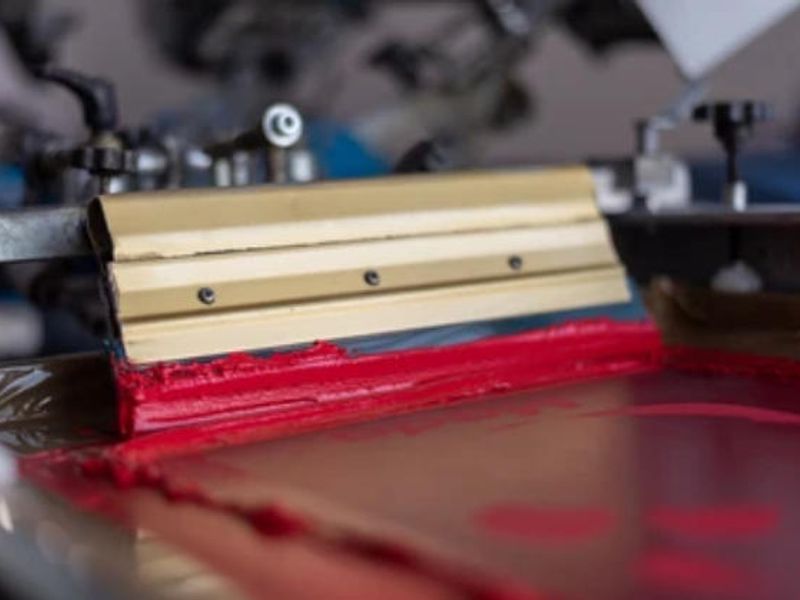
Figure 1 — A squeegee pulling red ink across the mesh. The ink volume left behind is fixed here, before any pigment choice matters.
Three numbers are fixed before anyone opens a sample bag: the wet film your method lays down, the mesh count stretched on your screen, and the depth engraved into your cylinder. None of them is a pigment property. All three are machine properties, set when the press was bought or when the job was quoted, and none of them moves because a buyer wants a coarser sparkle.
That order matters. Particle size has to suit the channel the press opens. A 5–25 μm grade still needs a film that allows the flakes to transfer and orient properly; the quoted particle size describes their lateral dimensions, not their thickness. A coarse glitter in an unsuitable channel can disrupt transfer and print as a rough spot you can feel with a fingernail.
So the shortlist is arithmetic, not taste. Take the film your method lays down and compare the grade range on the data sheet with the press geometry and transfer requirements. There is no universal conversion from film thickness to allowable particle size. When the grade and the process do not meet, tinkering at the press may not close the gap. You change method, or you change grade.
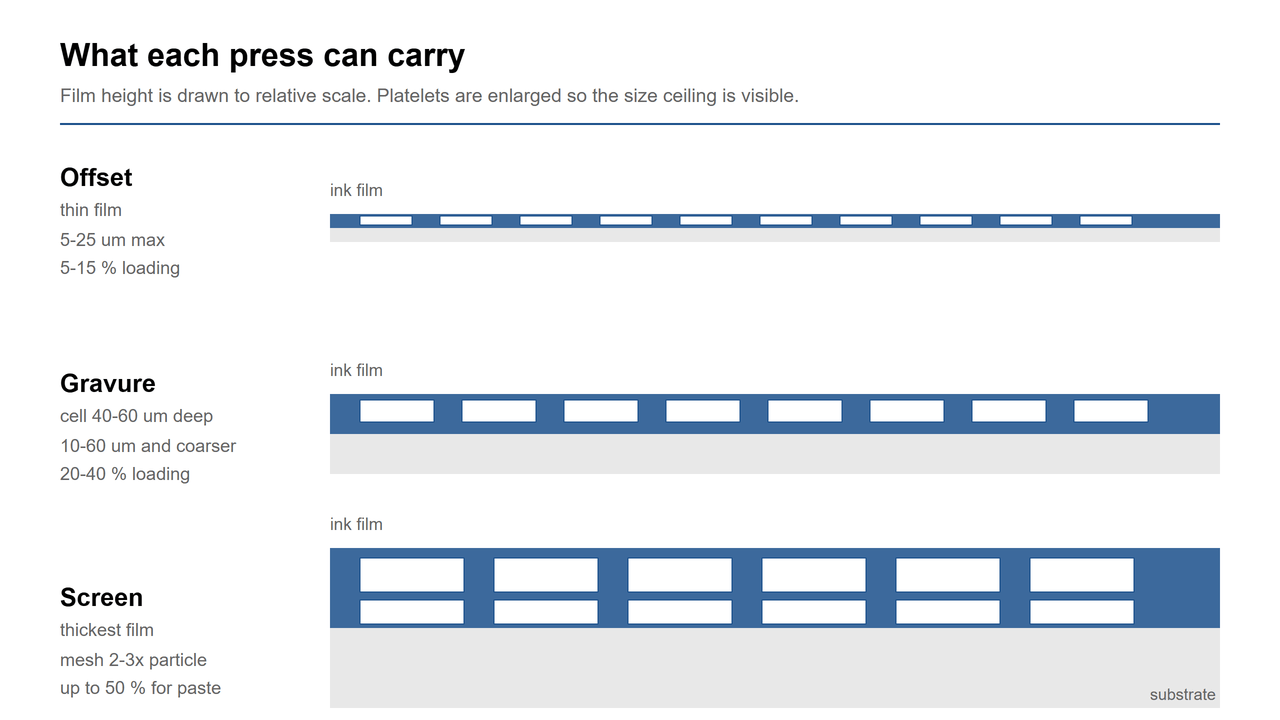
Figure 2 — Wet film depth by method: offset lays down the thinnest film, screen the thickest. A platelet has to fit inside the film, not above it.
The question to settle first is not which pearl is finest. It is what your press actually lays down, and what fits inside that film. The four sections below answer it per method, using the numbers each channel tolerates.
Offset transfers ink through a blanket in a thin film. The plate carries a thin ink layer, the blanket transfers it onto the sheet, and the resulting layer gives the flakes little room to arrange themselves. That thin-film transfer supports crisp type at speed, and it also constrains pigment size.
The working window is narrow and well defined. Offset ink carries 5–15 % pigment by weight, and the grades it can handle run 5–25 μm. Above that range, coarse particles can interfere with transfer and surface smoothness. You see speckle instead of sheen, with individual flakes catching light at their own angle rather than a layer reflecting as one surface.
That 5–15 % loading is not a suggestion either. Push loading up to buy coverage and the ink body changes underneath you: tack can rise and transfer can suffer, depending on the vehicle and formulation. The effect you gained at the top of the sheet may be paid for at the tail.
The film decides the flake, not the flake the film.
5–25 μm is the offset ceiling; 5–15 % is the offset loading.
If the effect has to read larger than that, the job belongs on a different press.
Inside the window there is still a real choice. Fine grades give smooth coverage and a soft satin that survives four-colour process work without breaking the image underneath. The upper end of the range gives more visible flake per unit area, but only where the film is generous enough to hold it. Before you ask an ink maker for a grade, ask what film the job actually lays down.
Gravure forms its film by transferring ink from engraved cells. The image is engraved into a copper cylinder, the cylinder picks up ink, a doctor blade wipes the surface clean, and each cell releases ink onto the substrate. Cell geometry meters the ink, and the cells can go deep: 40–60 μm is a normal working depth, matched to powders in the 10–60 μm range.
That depth helps explain the difference. A cylinder with 40–60 μm cells can carry coarser grades than offset, provided the cell openings and release characteristics also suit the powder. The deposited ink must still give the flakes room to orient so the printed layer reads as a surface rather than a scattering of bright dots.
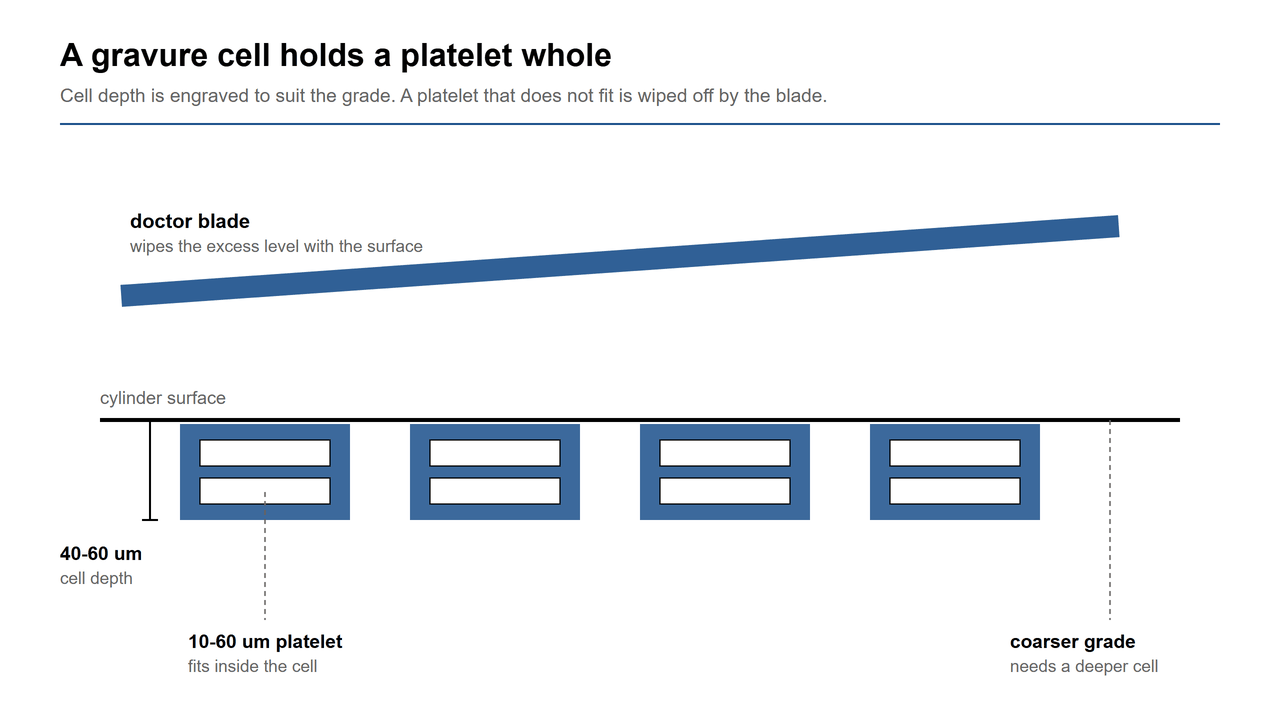
Figure 3 — A gravure cell deep enough to hold one platelet whole. A shallow cell cuts the plate in half under the doctor blade.
Loading follows the geometry: gravure inks run 20–40 % pigment by weight. Viscosity has to sit in a narrow band as well, 18–25 s on a DIN 4 cup, because the cell has to fill completely and empty cleanly. Run outside that band and filling, release and print consistency can suffer; check the behaviour with the ink vehicle and cylinder you actually use.
Metal effects carry their own figure. Aluminium paste in gravure runs 20–30 %, lower than the pearlescent range. Lamellar particles orient and overlap, while the paste type and vehicle determine whether the effect is leafing or non-leafing. Solvent-borne gravure dries by evaporation and the film shrinks as it dries, helping lock the flake orientation in place. UV-curable gravure is available where the press can take it, and curing fixes the orientation established during application and flow.
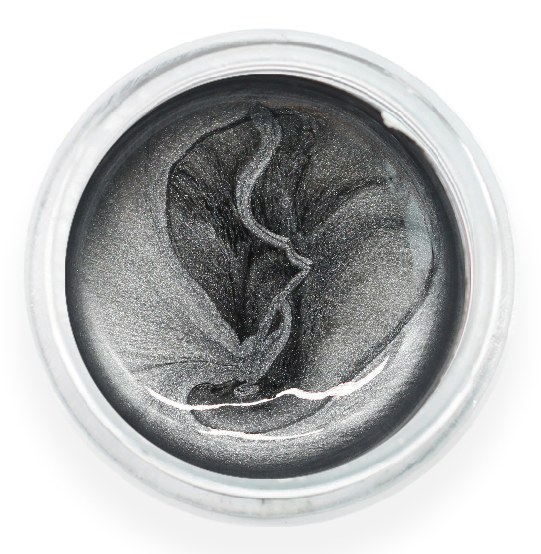
Figure 4 — Metallic luster paste in an open jar, the form many gravure and screen inks are bought in.
Before you specify a grade for a gravure job, get the cell depth off your engraver. Check it alongside the cell opening and ink release behaviour to decide whether the powder belongs on that cylinder.
Put the three channels side by side and the whole decision collapses into one table. Everything above is a consequence of the middle two columns.
| Method | Particle size it can carry | Typical pigment loading | What else constrains it |
|---|---|---|---|
| Offset | 5–25 μm | 5–15 % | Thinnest film of the three; tack can rise as loading rises |
| Gravure | 10–60 μm at 40–60 μm cell depth | 20–40 %; aluminium paste 20–30 % | Viscosity 18–25 s on a DIN 4 cup |
| Screen printing | 10–60 μm at 100 mesh | 20–50 % for aluminium paste | Mesh aperture must be 2–3× the particle size |
Screen printing occupies the far end. It lays the heaviest film of the three, so it carries the coarsest material, but the mesh is a gate rather than a bucket. The rule is a ratio: keep the mesh aperture at 2–3× the particle diameter. A 10–60 μm powder therefore wants something around 100 mesh. If you move to a coarser screen to lay more ink, check both the actual aperture and the resulting film weight.
Screen also tolerates the highest metal loading, 20–50 % for aluminium paste, which is why metallic and bronze effects are usually specified there. An AC1000GX bronze powder for metallic inks with a 1000 mesh cut still needs its particle-size distribution checked against the screen aperture. Very coarse decorative material is a separate case: glitters run 150–600 μm, or 1/128″ to 1/32″, and need a screen built for them rather than a standard one.
Spray and air-assisted application bring different constraints. For aluminium paste, the spray loading is 10 % or below. Nozzle passage, atomisation and the deposited film all affect how the metal reads. If your line sprays, confirm the grade and loading with the application setup and check the depth of effect in a drawdown. Where the requirement is a colour change triggered on the printed piece, thermochromic pigment for screen printing follows the same aperture rule as any other particle.
Three things go wrong on press, and two of them get blamed on the pigment when the press is responsible.
The first is a dry film that came in under target. Pearlescent and metallic effects depend on flakes lying parallel to the surface so the layer reflects as a plane. An unsuitable film weight can disrupt coverage and orientation, leaving the print flat and slightly grey. Where film weight is the cause, swapping powder alone will not recover it.
The second is unsuitable mesh or cell geometry. Screen aperture smaller than twice the particle diameter can blind at the edges, coverage falls off in patches, and the printer may compensate with pressure that damages the stencil. In gravure the related failure is a cell that cannot accommodate or release the coarse powder: flakes can bridge the cell mouth and be dragged across the cylinder by the doctor blade.
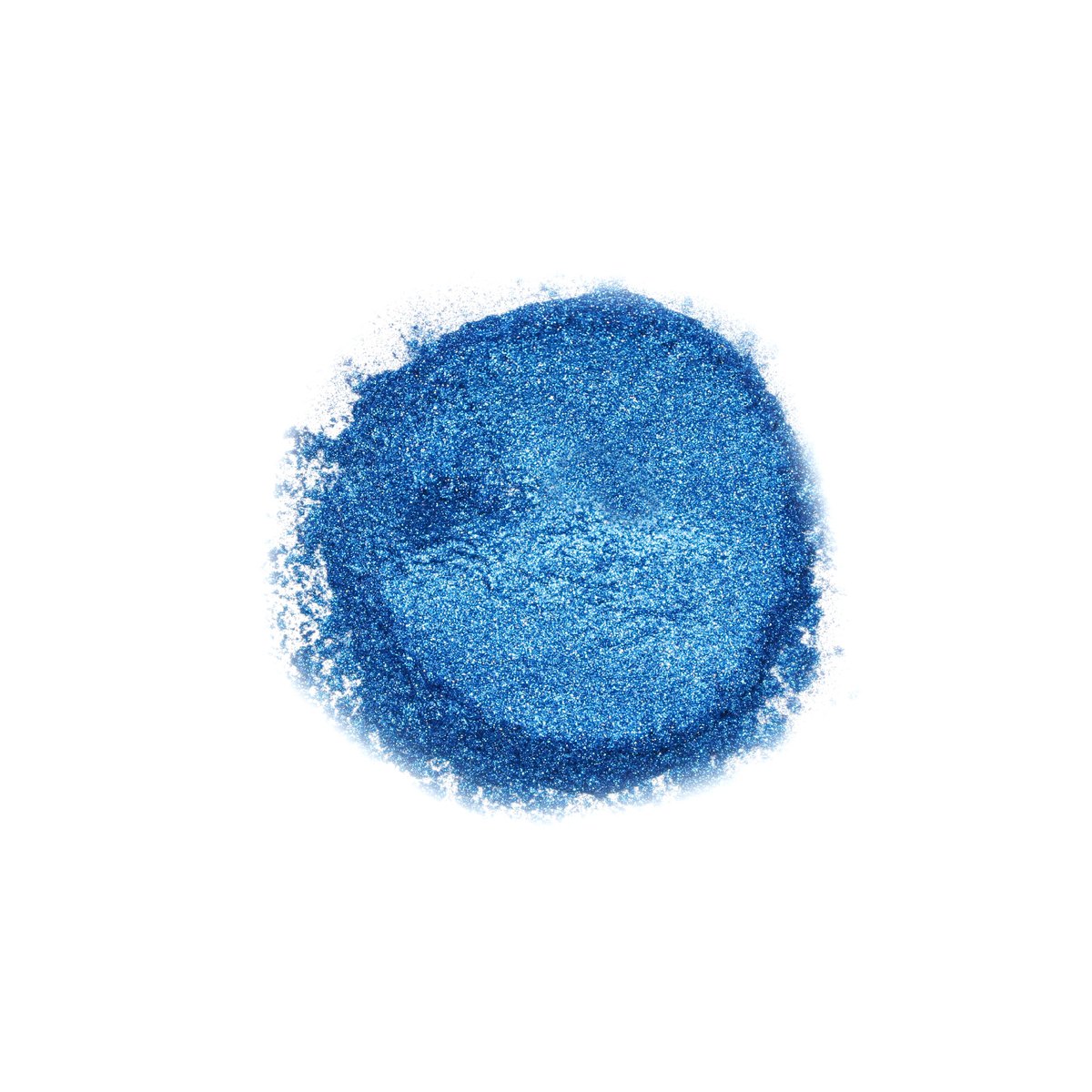
Figure 5 — Aluminium pigment powder heaped on white: the powder side of the same metallic ink.
The third is base colour. Colour-shift material needs a dark ground for maximum travel, because the shift is read against what the coating sits on. On white or light board the arc is compressed and the finished pack can look more like a static metallic than a shifting one. Chameleon grades span 5–25 μm at the fine end up to 100–250 μm at the coarse end, and the wide-travel effects are the ones most dependent on a black or deep base coat underneath.
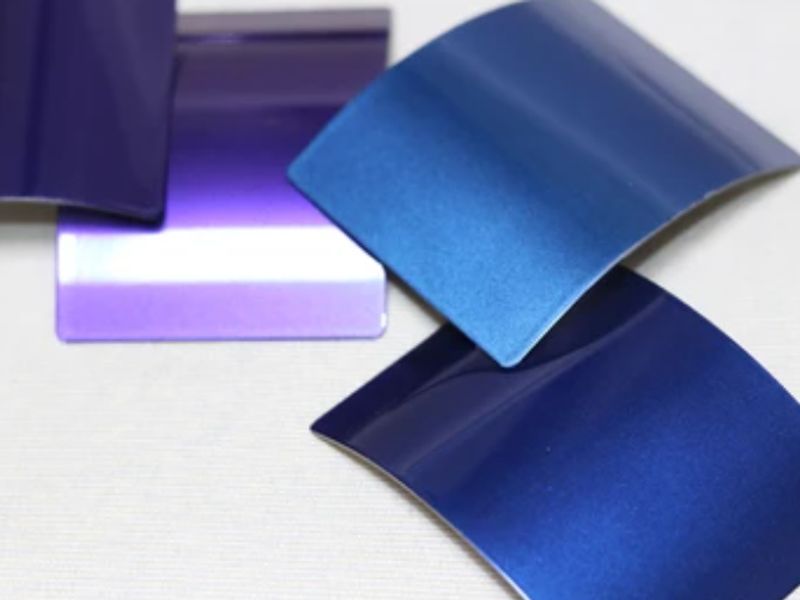
Figure 6 — Effect pigment panels on moulded board, several colours side by side. The colour travel sits on the curve, not on the flat.
Before the web goes through a drying tunnel, confirm what the carrier system tolerates and match the ink vehicle to it rather than assuming the powder sets the limit. Substrate choice drives this further than most buyers expect, particularly on film and foil where adhesion and primer choice decide whether the effect survives converting at all — primer choice and delamination risk are worth reading before you lock a specification.
Match grades to the channel rather than working through a numbered family. When reviewing the pigments used across printing, start with what the press can carry. That is why a shortlist takes three answers rather than a catalogue.
Send us these three and the shortlist writes itself:
With those, an effect that has to let a tinted base show through can be assessed using a TiO₂-free grade such as KT-SS0300, which runs 10–60 μm. Check the transparency and appearance in your vehicle over the intended base colour. Technical data sheets, safety data and certification status are provided on request.
No. That size falls outside the offset range and can disrupt transfer and surface smoothness, printing as grit and speckle rather than sheen. Offset holds to 5–25 μm. Move the job to gravure or screen, or drop to a fine grade and get coverage from hiding power instead.
20–40 % by weight is the working band. Confirm the figure on press against your cell depth and the opacity the design needs. Aluminium paste runs lower in gravure, at 20–30 %. Check the paste type and vehicle as well, because leafing behaviour and transfer affect the finished metal appearance.
Ratio decides, not the grade alone. Keep the mesh aperture at 2–3× the particle diameter: a 10–60 μm powder is matched to around 100 mesh, with the actual aperture checked. Go below that ratio and the screen can blind at the aperture edges, so coverage falls away before the effect does.
Only a fraction of it. On white or light board the travel is compressed to a short arc. For the full range, print over black or a deep base coat. If the design must stay light, assess candidate grades over that actual base rather than chasing maximum travel.
Send your press data and we will shortlist against it: method, mesh or cell depth, dry film, substrate. You get a custom sample pack built around your application, with grades matched to the channel you actually run rather than a catalogue sweep. Tell us what the pack has to do on shelf and we will tell you which range reaches it.
Download the Pearl Pigment Color Cards and send the three figures with your inquiry.
Ein Perlglanzfleck wäscht sich aus, während die daneben liegende, einfarbige Schicht hält. Schuppen reflektieren Strahlungswärme, daher härtet dieser Fleck erst spät aus. Die Einwirkzeit, nicht das Pigment, sollte optimiert werden.
MEHR LESEN
OVI-Pigmente (Optisch Variable Tinte) sind die führende Authentifizierungspigment-Großhandelslösung für Markenschutz und Sicherheitsdruck. Sie erzeugen beeindruckende Farbwechseleffekte, die durch Scannen, Fotokopieren oder Standarddruck nicht reproduziert werden können. Die Chromashift-Serie von Kolortek bietet verifizierte Farbverläufe in über 17 Farbkombinationen und erfüllt die strengen optischen und Haltbarkeitsstandards, die von Sicherheitsdruckereien und Markeninhabern weltweit gefordert werden. Für Teams, die größere Mengen an OVI-Pigmenten bestellen, liefern wir flexible Mengen – von F&E-Mustern bis hin zu kompletten Produktionsläufen.
MEHR LESEN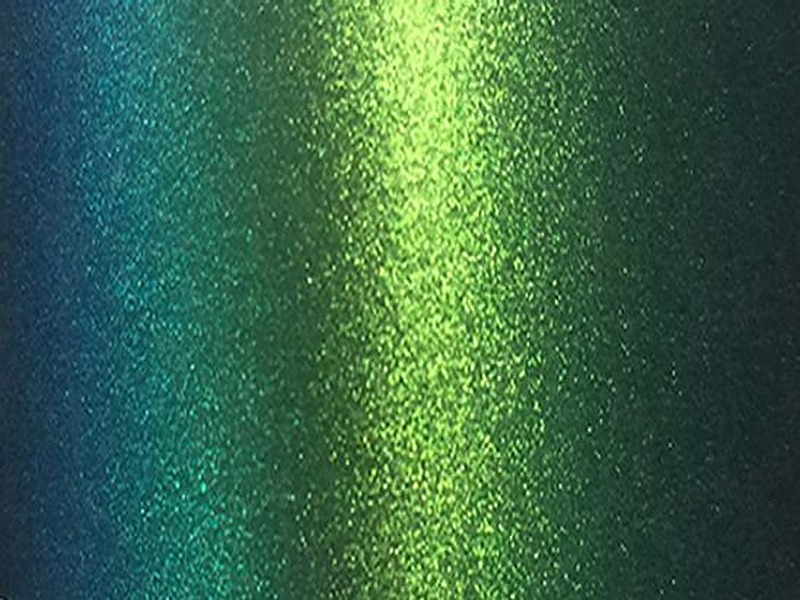
Die umgekehrt gedruckte Farbwechseltinte befindet sich im Inneren des Laminats, nicht auf dessen Oberfläche. Die Beladung, die Zellentiefe und ein Haftfestigkeitsziel von 1,5 N/15 mm entscheiden über die Haltbarkeit der Packung.
MEHR LESEN
 Deutsch
 English
 Français
 Русский
 Español
 Português