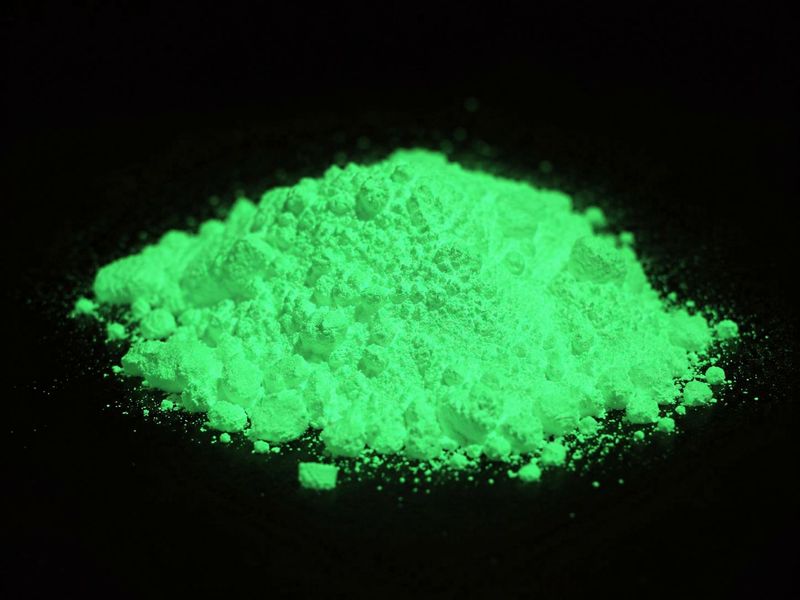
Strontiumaluminat ist das leistungsstarke anorganische Wirtsgitter, das den heutigen leistungsfähigsten Systemen zugrunde liegt.photolumineszierendes PigmentSysteme – dotiert mit Seltenerden, mit lang anhaltendem Nachleuchten und deutlich heller als die Zinksulfidmaterialien, die es weitgehend verdrängt hat. In Pulverform absorbiert es Umgebungslicht und emittiert über Stunden ein anhaltendes grünes oder blaugrünes Leuchten. Dadurch ist es der funktionale Kern von Sicherheitsmarkierungen, dekorativen Beschichtungen, Nageldesign und Bastelanwendungen, bei denen ein zuverlässiges Nachleuchten wichtig ist. Dieser Artikel erläutert die chemischen Prozesse, die diesen Effekt bewirken, die praktischen Variablen, die die Leistung beeinflussen, und wo…phosphoreszierendes PulverBasierend auf Strontiumaluminat passt es – oder passt nicht – in realen Formulierungsszenarien, einschließlich eines direkten Vergleichs mit Zinksulfid-Alternativen, die immer noch als solche verwendet werden.Strontium-Leuchtpulverin mehrstufigen Produktlinien.
Die Chemie hinter dem Leuchten
Strontiumaluminat (SrAl₂O₄) ist ein Erdalkalialuminat. Allein ist es wenig lumineszierend. Die Lumineszenz entsteht durch gezielte Dotierung – typischerweise mit Europium (Eu²⁺) als primärem Aktivator und Dysprosium (Dy³⁺) als Co-Aktivator. Diese Eu/Dy-Kombination ist für den Einfang- und Freisetzungsmechanismus verantwortlich, der die lang anhaltende Phosphoreszenz bedingt.
Hier die praktische Erklärung: Wenn Photonen aus Sonnenlicht oder künstlicher Beleuchtung auf das Material treffen, absorbieren Eu²⁺-Ionen diese Energie, wodurch Elektronen angeregt werden. Einige dieser Elektronen werden in Gitterdefekten eingefangen, die durch das Dy³⁺-Dotierungsmittel entstehen. Im Dunkeln reicht die thermische Energie bei Raumtemperatur aus, um Elektronen aus diesen flachen Defekten zurück zum Eu²⁺-Emissionszentrum zu befördern und so das charakteristische grüne Nachleuchten (~520 nm) zu erzeugen. Tiefe und Dichte dieser Defekte bestimmen Dauer und Intensität des Nachleuchtens.
Das ist die entscheidende Variable, die Entwickler oft unterschätzen: Die Verteilung der Haftstellen ist wichtiger als die reine Dotierungskonzentration. Überdotierung verringert die Lumineszenz. Das Verhältnis von Europium zu Dysprosium, die Synthesetemperatur und die Zusammensetzung des Flussmittels beeinflussen das endgültige Emissionsprofil.
Strontiumaluminat vs. Zinksulfid – Ein direkter Vergleich
Zinksulfidbasierte Leuchtstoffe waren jahrzehntelang Industriestandard. Sie werden noch immer verwendet. Um zu verstehen, warum beide Leuchtstoffe in kommerziellen Produktlinien vertreten sind, ist eine ehrliche Betrachtung der jeweiligen Vor- und Nachteile erforderlich.
| Eigentum | Strontiumaluminat (Eu/Dy) | Zinksulfid (Cu, Ag) |
|---|
| Nachglühdauer | 6–12+ Stunden (praktische Dunkelheit) | 30 Minuten – 2 Stunden |
| Anfangshelligkeit | Hoch | Niedriger, schnellerer Zerfall |
| Gemeinsame Emissionsfarbe | Gelbgrün, Blaugrün, Himmelblau | Gelbgrün, Orange, Rot |
| Wasserempfindlichkeit | Mittel – erfordert Beschichtung oder Verkapselung für wasserbasierte Systeme | Bessere Basisstabilität bei einigen Formulierungen |
| Säure-/Laugenbeständigkeit | Mangelhaft ohne Oberflächenbehandlung | Ebenfalls empfindlich; variiert je nach Grad |
| Regulierung / Sicherheit | Nicht radioaktiv, allgemein akzeptiert | Nicht radioaktiv; bei älteren, mit Kupfer aktivierten Typen bestanden Spurenbedenken. |
| Kosten | Höher | Untere |
| Typische Anwendungen | Sicherheitsbeschilderung, Hochleistungsbeschichtungen, Nageldesign, Kunsthandwerk | Neuheiten, kurzzeitig leuchtende Produkte, Bedarf an orange/roter Emission |
Wichtig zu wissen: Zinksulfid ist insbesondere für nicht-grüne Emissionen weiterhin relevant. Wenn Ihre Formulierung orangefarbenes, rotes oder gelbes Leuchten erfordert – Farben, bei denen Strontiumaluminatsysteme traditionell schwächer sind –, stellen Zinksulfid-Typen nach wie vor eine praktikable Alternative dar. Der Nachteil besteht in einer kürzeren Nachleuchtdauer und einer geringeren Anfangsleuchtdichte.
Warum Wasserempfindlichkeit die Hauptsorge des Formulierers ist
Strontiumaluminat ist hygroskopisch und hydrolysiert unter sauren oder feuchten Bedingungen. Dies ist keine Nebensache – es ist die entscheidende Einschränkung für die Formulierung. Unbeschichtetes Strontiumaluminat zersetzt sich in Kontakt mit Wasser allmählich: Sr²⁺-Ionen werden ausgelaugt, das Kristallgitter bricht zusammen und die Lumineszenzleistung nimmt mit der Zeit messbar ab.
Die Industrie reagiert darauf mit Oberflächenverkapselung – typischerweise mit SiO₂-, Harz- oder Polymerbeschichtungen, die nach der Synthese aufgebracht werden. Diese Behandlungen verlängern die Nutzungsdauer in wasserbasierten Systemen deutlich. In der Praxis werden Produkte mit der Kennzeichnung „für wasserbasierte Systeme“ entsprechend behandelt und sind so formuliert, dass sie die Dispersion in wässrigen Medien ohne schnellen Abbau überstehen. Produkte ohne diese Kennzeichnung sollten weiterhin in lösemittel-, öl- oder Feststoffmatrix-Anwendungen eingesetzt werden.
Hersteller von wasserbasierten Farben, Druckfarben oder Kosmetikgrundlagen müssen dies bei der Beschaffung explizit angeben. Die Produktbezeichnung ist wichtig – beispielsweise ist der Unterschied zwischen einer Standard-SC-Qualität und einer wasserbasierten, optimierten Variante derselben Farbfamilie ein funktionaler Unterschied und nicht nur eine Frage der Kennzeichnung.
Partikelgröße und Leistung: Was ändert sich tatsächlich?
Die Phosphoreszenzleistung von Strontiumaluminat skaliert mit der Kristallgröße. Größere Partikel enthalten vollständigere Haftstellennetzwerke und emittieren intensiver. Dies ist ein echter Kompromiss:
- Gröbere Korngrößen (35–75 μm):Höhere Nachleuchthelligkeit und längere Leuchtdauer. Bevorzugt für Farben, Gießharze und Anwendungen, bei denen die Oberflächenstruktur keine Rolle spielt.
- Feinere Korngrößen (5–25 μm Bereich):Die Leuchtdichte ist zwar reduziert, aber für glatte Filme, Druckfarben und dünnschichtige kosmetische Anwendungen wie Nagelgele, bei denen Oberflächenbeschaffenheit und Filmintegrität wichtig sind, notwendig.
In der Praxis lässt sich ein grobkörniges Material nicht einfach vermahlen, um ein feinkörniges Produkt ohne signifikanten Lumineszenzverlust zu erhalten. Die Kugelmühle zerstört die Kristallstruktur und Haftstellen. Feinkörnige Qualitäten müssen bereits im Synthesestadium durch kontrollierte Nukleation erzeugt werden und dürfen nicht aus einem grobkörnigen Ausgangsmaterial vermahlen werden.
Speziell für Druckverfahren – Siebdruck, Tampondruck oder Tintenstrahldruck – sind feinere Partikelgrößen nicht nur erwünscht, sondern betrieblich notwendig, um ein Verstopfen des Siebs zu verhindern und eine hohe Druckauflösung zu gewährleisten.
Anwendungshinweise für verschiedene Formate
Farben und Lacke:Strontiumaluminat eignet sich gut für architektonische, dekorative und allgemeine industrielle Beschichtungen. Für Autolacksysteme ist es nicht empfehlenswert, da die hohen Einbrenntemperaturen und die chemische Umgebung von Autoklarlacken mit einer stabilen Phosphoreszenzleistung unvereinbar sind. Für architektonische Sicherheitsanwendungen (Treppenkanten, Fluchtwegmarkierungen, Notfallschilder) ist es ein Standardmaterial.
Nagel- und Kosmetikanwendungen:Dekorative Kosmetik und Nageldesign stellen einen wachsenden Markt für photolumineszierende Pigmentsysteme dar. Hierbei ist neben der Leistungsfähigkeit auch die Einhaltung der Sicherheitsstandards entscheidend. Für kosmetische Anwendungen bestimmte Produkte müssen entsprechend zertifiziert sein. Leuchtpulver für Nägel lassen sich bei korrekter Dispergierung gut in Gelbasen und UV-härtende Systeme einarbeiten – die übliche Vorgehensweise ist die trockene Dispergierung in die Harzkomponente vor der UV-Härtung.
Bastel- und Heimwerkerprodukte:Harzguss, Schleim und Bastelprojekte vertragen gröbere Körnungen und stellen im Allgemeinen die Anwendung mit den geringsten Einschränkungen dar. Der begrenzende Faktor ist üblicherweise die Sicherheit der Endverbraucher (Hautkontakt) und nicht die chemische Zusammensetzung des Materials.
Baustoffe:Leuchtende Sand- und Zuschlagstoffmischungen verleihen Beton, Terrazzo und Natursteinanwendungen einen Leuchteffekt. Die Materialverträglichkeit ist hierbei alkalisch – Strontiumaluminat in einer Portlandzementmatrix ist bei hohem pH-Wert der gleichen Hydrolyseproblematik ausgesetzt. Verkapselte oder harzbeschichtete Varianten sind für die Dauerhaftigkeit zementgebundener Systeme erforderlich.
Angel- und Sicherheitsausrüstung:Anwendungsbereiche sind solche, bei denen Nachleuchtdauer und Zuverlässigkeit wichtiger sind als ästhetische Perfektion. Typisch sind gröbere Körnungen, lösemittelbasierte Trägermaterialien und einfache Epoxid- oder Polyurethan-Decklacke.
Farboptionen und Emissionsbereich
Gelbgrün (~520 nm) ist nach wie vor die leistungsstärkste Emission von Strontiumaluminat – sie entspricht der maximalen skotopischen Empfindlichkeit des menschlichen Auges, d. h. das Auge nimmt sie bei schwachem Licht im Vergleich zu anderen Farben als heller wahr. Himmelblaue und blaugrüne Varianten sind zwar verfügbar, weisen jedoch eine geringere Leuchtdichte auf; die Fallendynamik für kurzwellige Emissionen in SrAl₂O₄-Systemen ist weniger effizient.
Für violette, rosa-orange, orange-gelbe und rote Emissionen – Farben, die Strontiumaluminat nicht natürlich erzeugt – können andere Wirtsmaterialien oder Leuchtstoffe auf Zinksulfidbasis zum Einsatz kommen. Dies sind legitime Produktoptionen und keine minderwertigen Alternativen. Entwickler sollten jedoch realistische Erwartungen an die Nachleuchtdauer haben. Ein rot emittierendes Leuchtpulver erreicht nicht die 8-stündige Nachleuchtdauer eines gelbgrünen Strontiumaluminats. Das ist physikalisch bedingt und kein Produktmangel.
Beschaffungs- und Qualitätsindikatoren
Bei der BewertungStrontiumaluminatpulverLieferanten, die relevanten technischen Fragen konzentrieren sich auf:
- Reinheit und Konsistenz der Dotierstoffe:Chargenbedingte Schwankungen des Eu/Dy-Verhältnisses führen zu messbaren Leistungsabweichungen. Fordern Sie daher chargenweise Daten zur Nachleuchtdauer an.
- Art und Vollständigkeit der Oberflächenbehandlung:Bei wasserbasierten Systemen sollten Sie wissen, welche Beschichtung verwendet wird und ob diese auf hydrolytische Stabilität unter Ihren tatsächlichen pH- und Temperaturbedingungen getestet wurde.
- Partikelgrößenverteilung:D50 allein reicht nicht aus. Die gesamte Vertriebsreichweite ist für die Filmqualität und die Gleichmäßigkeit der Leistung entscheidend.
- Regulatorische Dokumentation:REACH-Konformität, Sicherheitsdatenblätter und Sicherheitsdaten, die für Ihre Endanwendung relevant sind (Kosmetikqualität vs. Industriequalität sind wesentlich unterschiedliche Kategorien).
Lieferanten, die nach ISO 9001 zertifiziert sind und eine Zertifizierung durch Dritte (SGS, TÜV SÜD) vorweisen können, bieten eine bessere Rückverfolgbarkeit. Für kosmetische Anwendungen sind die Koscher-Zertifizierung und entsprechende Sicherheitsdokumente relevante Kaufkriterien.
Häufig gestellte Fragen
F: Wie lange leuchtet Strontiumaluminat nach Lichteinwirkung tatsächlich nach?
Unter Standardladebedingungen (5–10 Minuten Belichtung mit Leuchtstoffröhren- oder Tageslicht) erzeugen hochwertige Eu/Dy-dotierte Strontiumaluminat-Typen ein sichtbares Leuchten für 6–12 Stunden. „Sichtbar“ bedeutet hier, dass das Leuchten mit dunkeladaptiertem menschlichem Auge wahrnehmbar ist – nicht durchgehend photometrisch intensiv. Der Helligkeitsabfall ist in den ersten 30 Minuten steil und flacht dann allmählich ab. Werbeaussagen wie „24-Stunden-Leuchten“ beschreiben den Ausläufer der Abklingkurve bei sehr geringen Leuchtdichten.
F: Kann Strontiumaluminat in wasserbasierten Beschichtungen verwendet werden?
Ja, aber nur mit speziell für die Wasserbeständigkeit behandelten Produkten. Unbehandeltes Strontiumaluminat hydrolysiert in wässrigen Medien und verschlechtert dadurch mit der Zeit seine Leistung. Oberflächenverkapselte Produkte (mit Siliciumdioxid oder Harz beschichtet) sind für diese Umgebung geeignet. Prüfen Sie den pH-Bereich, in dem Ihr Beschichtungssystem arbeitet – auch behandelte Produkte haben Grenzen, typischerweise pH 6–9 für zuverlässige Langzeitstabilität.
F: Ist Strontiumaluminat für die kosmetische Anwendung unbedenklich?
Strontiumaluminat, das in dekorativer Kosmetik (Nagelkunst, Körperbemalung) verwendet wird, muss die regulatorischen Anforderungen des Zielmarktes erfüllen. Es ist nicht radioaktiv und gilt bei entsprechender Reinheit im Allgemeinen als sicher für die äußerliche Anwendung in Kosmetika. Da es jedoch anorganisch ist, entspricht es nicht automatisch allen regulatorischen Rahmenbedingungen für Kosmetika. Die Beschaffungsabteilung sollte daher die vollständigen regulatorischen Dokumente anfordern und die Anwendbarkeit auf den jeweiligen Anwendungsfall bestätigen.
F: Warum beeinflusst die Partikelgröße die Leuchtkraft?
Die Lumineszenzeffizienz von Strontiumaluminat korreliert mit der Kristallintegrität und der Dichte an Haftstellen. Größere Partikel weisen eine vollständigere Kristallstruktur und mehr funktionelle Haftstellen pro Volumeneinheit auf. Feinere Partikel besitzen ein höheres Oberflächen-Volumen-Verhältnis, was zu mehr Oberflächendefekten führt, die als nicht-strahlende Löschstellen anstatt als produktive Haftstellen wirken. Daher verschlechtert das Mahlen grobkörniger Partikel die Leistung – man reduziert nicht nur die Partikelgröße, sondern erzeugt auch Löschstellen. Kommerziell hergestellte feine Partikel werden mit kontrollierter Nukleation synthetisiert, um diesen Effekt zu minimieren.
Wenn Sie an einer spezifischen Herausforderung bei der Formulierung arbeiten – Kompatibilität mit wasserbasierten Systemen, Anpassung der Emissionsfarbe oder regulatorische Dokumentation für einen bestimmten Markt – stehen Ihnen technische Muster und Datenblätter zur Bewertung über die gesamte Produktpalette zur Verfügung.

 Deutsch
 English
 Français
 Русский
 Español
 Português