Eine Nachricht hinterlassen
Wenn Sie an unseren Produkten interessiert sind und mehr Details erfahren möchten, hinterlassen Sie bitte hier eine Nachricht. Wir werden Ihnen so schnell wie möglich antworten.
Bath Bomb Colorant: Dose Measured in the Tub, Not the Ball
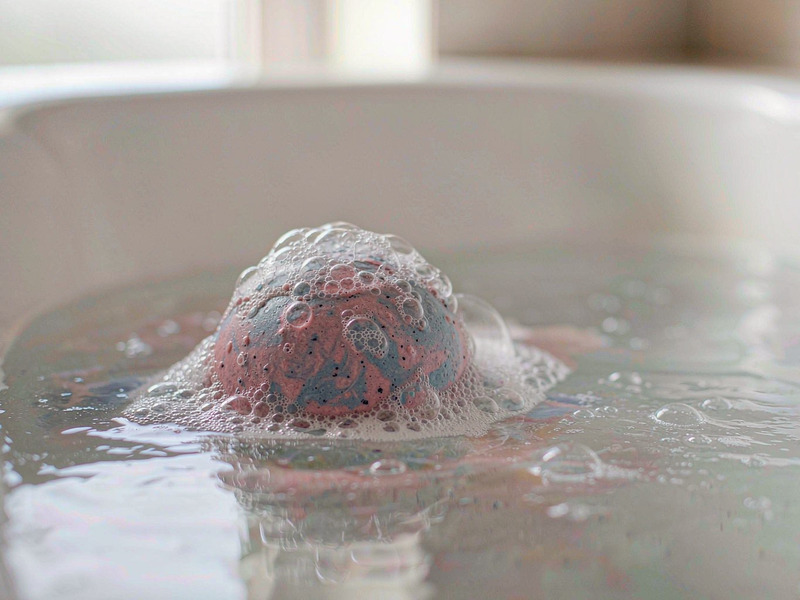
A 100 g bath bomb in a 150 L tub dilutes about 1:1,500. Color that dissolves and color that stays put are different materials, and the claim comes first.
A 100 g bath bomb dropped into a 150 L tub dilutes at 1 : 1,500. Every color decision the customer makes happens at that second concentration; almost every color decision the factory makes happens on the surface of the ball. Two concentrations, one product, and 1,500 between them. This page is about closing that gap before it becomes a customer complaint.
A bath bomb and the water it dissolves into are the same material at two concentrations, and the distance between them is 1,500 to 1. Your incoming inspection runs at the first — color depth on the pressed surface, a swatch card held against the mold, a visual match to the master. Your customer runs at the second — a look at the water once the ball has finished fizzing and the surface has gone still.
That is why dosage trials on the ball plateau. The complaint is not that you added too little. It is that the number you were tuning was never the number the customer was reading.
The acceptance unit is a tub of water
The correction is not a bigger scoop. It is choosing the right measurement unit before choosing a number — and the arithmetic has to be on paper, because until it is, every dose decision is an opinion dressed as experience.
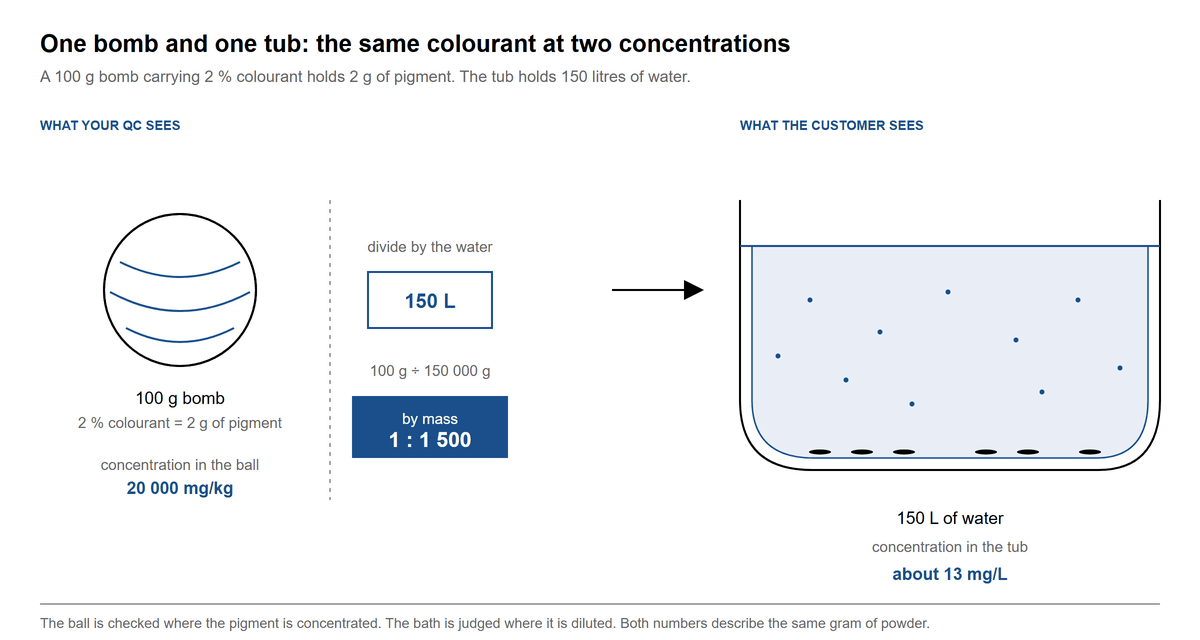
Fig. 1 — One 100 g bath bomb diluted into 150 L of water: 1 : 1,500; 2 % pigment becomes about 13 mg/L.
The calculation takes three inputs and no equipment.
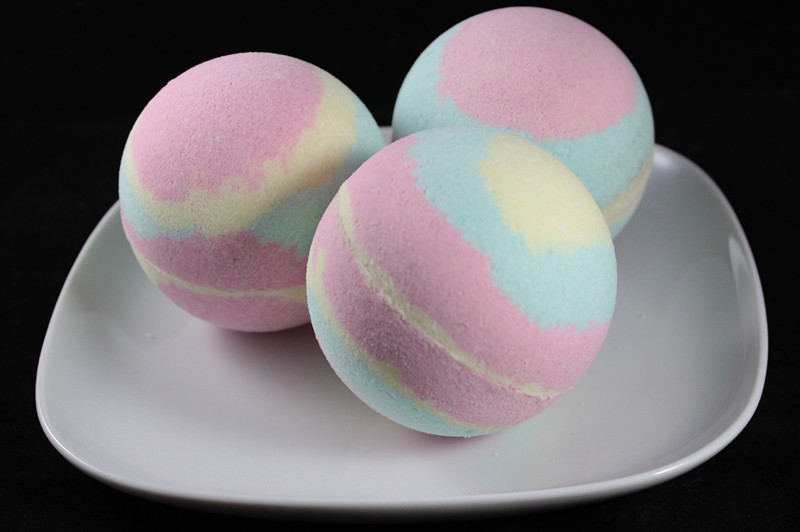
Fig. 2 — Three marbled bombs on a white tray. On the ball, the color is already more than enough.
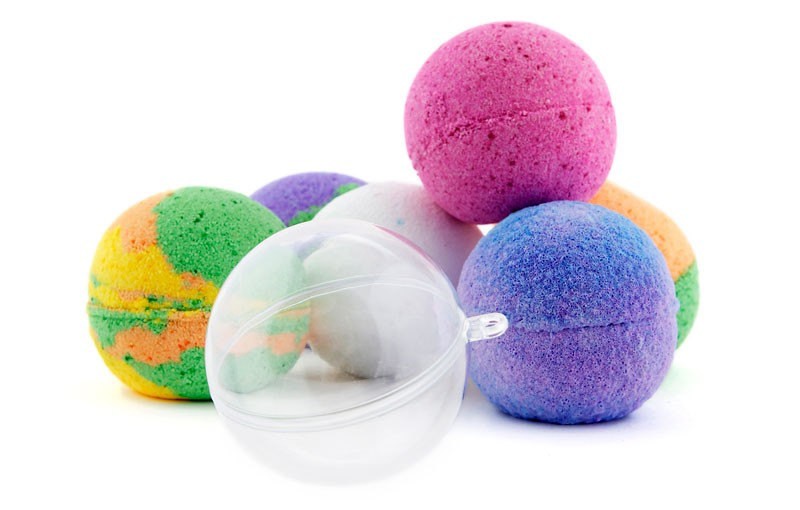
Fig. 3 — Six colored bombs beside the clear two-part mould. Several carry a second tone speckled through the body.
Now carry the pigment through the same ratio. At 2 % loading, a 100 g ball carries 2 g. Spread across 150,000 g of water that is 2 ÷ 150,000, or about 13 mg/L. At 1 % it is 1 g, or about 6.7 mg/L. A 200 g ball in a 200 L tub is the gentler case at 1 : 1,000.
Then read the number. Thirteen milligrams per liter is the order of magnitude where you see fine shimmer drifting through the water and no color in the body of it. It is not the order of magnitude that turns a bath pink. Nothing you do to the loading moves 13 mg/L into a visibly tinted tub without also moving the ball into a different material class — which is the next section's subject.
Here is where soap experience misleads, and it is worth being precise about which figures belong to which product. Our reference bands for soap — soap, not bath bombs — run 0.05–1.0 % for translucent, 1.0–4.0 % for opaque, 0.5–3.0 % for colored decoration, and 0.5–5.0 % for matte. A bath bomb base is an opaque white powder, so the honest starting band is the opaque one, and that band is then divided by 1,500 before anyone sees it. Opening at the soap habit of 1 % is not conservative. It is short by a factor you can compute.
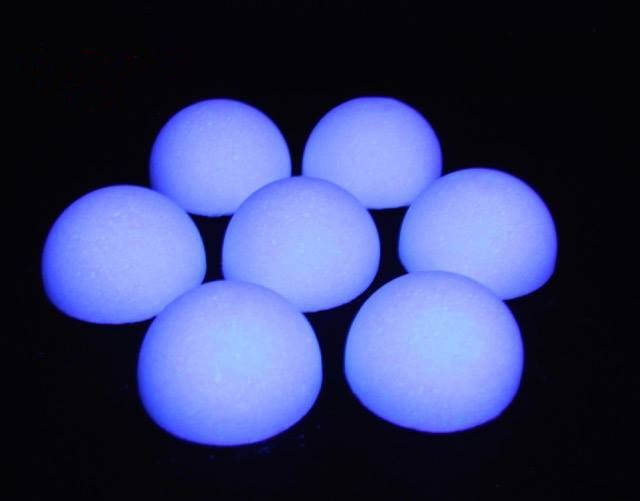
Fig. 4 — Surface brightness on seven finished bombs. The same light, spread over a bath instead of a ball, is diluted by the same 1,500.
At this point the obvious move is to add more. That is exactly the move the next section stops.
Everything a customer can say about a bath bomb in water reduces to a short list, and the list is organized by solubility rather than by hue. Three material classes cover nearly all of it.
| What you add | What it does in water | What the customer reports |
|---|---|---|
| Soluble dye | Dissolves fully; colors the whole tub evenly | "Lovely — but it dyed my tub and my towel" |
| Lake pigment | Insoluble; disperses through the oil phase and water; gives saturated streaks and speckles | "There is color, but there are particles" |
| Pearl mica | Insoluble, platelet-shaped, density 2.8–3.0 g/cm³ against water's 1.0 | "It flashed on the surface, then there was a layer on the bottom" |
"The water changes color" and "the tub stays clean" are not two settings on one dial. They are two separate paths. The first requires the material to dissolve. The second requires it not to. Settle which one you are selling before you settle what goes in the ball, and put the loading last — it is the only variable that cannot rescue a wrong choice above it.
Mica is roughly 2.8 times denser than water. Platelets that heavy will settle. That is not a formulation error. If settling is unacceptable for the product you are shipping, mica is the wrong material and no dosage adjustment rescues it.
The pearl range itself is grouped by effect rather than by shade — see the cosmetic pearl multicolor series for the interferences and multicolors that carry most bath-bomb briefs.
Pearl is a light-returning effect. A mica platelet coated with titanium dioxide and/or iron oxide takes incoming light and sends a portion of it back at an angle. How much of that returned light reaches an eye depends on what happened to the light before it reached the platelet — which is to say, on the medium behind it.
Transparent and glycerin soap is a light-transmitting medium. Light enters the bar, travels, reaches platelets deeper inside, and comes back out carrying their color with it. Our own reference note puts it plainly: mica's high reflective quality works best in products where it receives abundant light, transparent soap being the ideal medium.
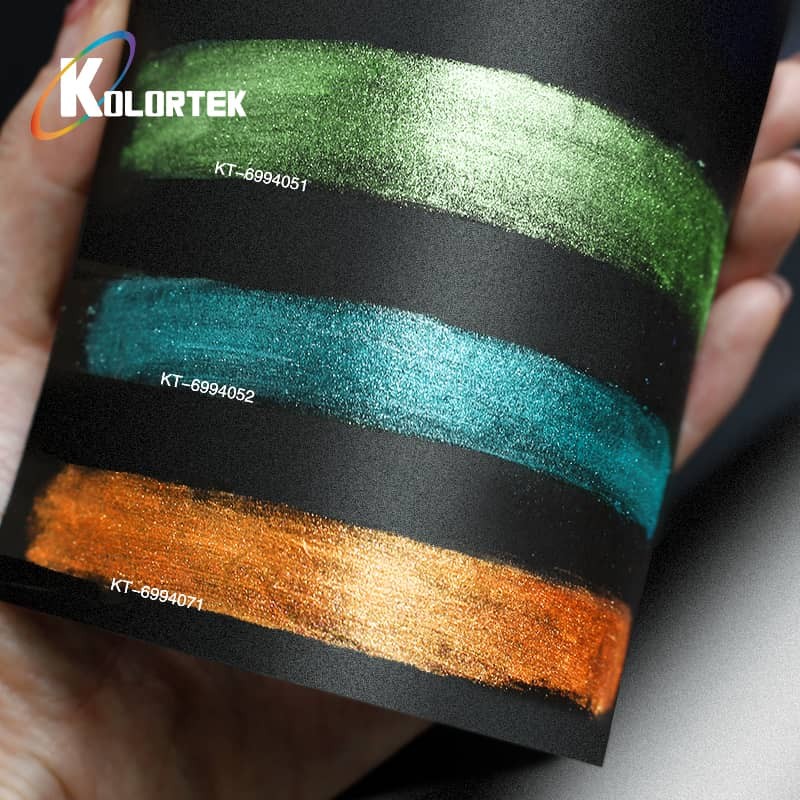
Fig. 5 — Three pearl bands drawn on black card. Change the card and you change what the same powder looks like.
A bath bomb base is not that medium. Sodium bicarbonate, citric acid, and cornstarch or kaolin compact into a white, opaque solid. White light hitting it scatters diffusely at the surface; there is no depth for the platelet flash to return from. The same loading that reads as a clean sheen inside a transparent bar reads as a faint, chalky tint on a bath bomb — not because the pigment degraded, but because the substrate stopped cooperating.
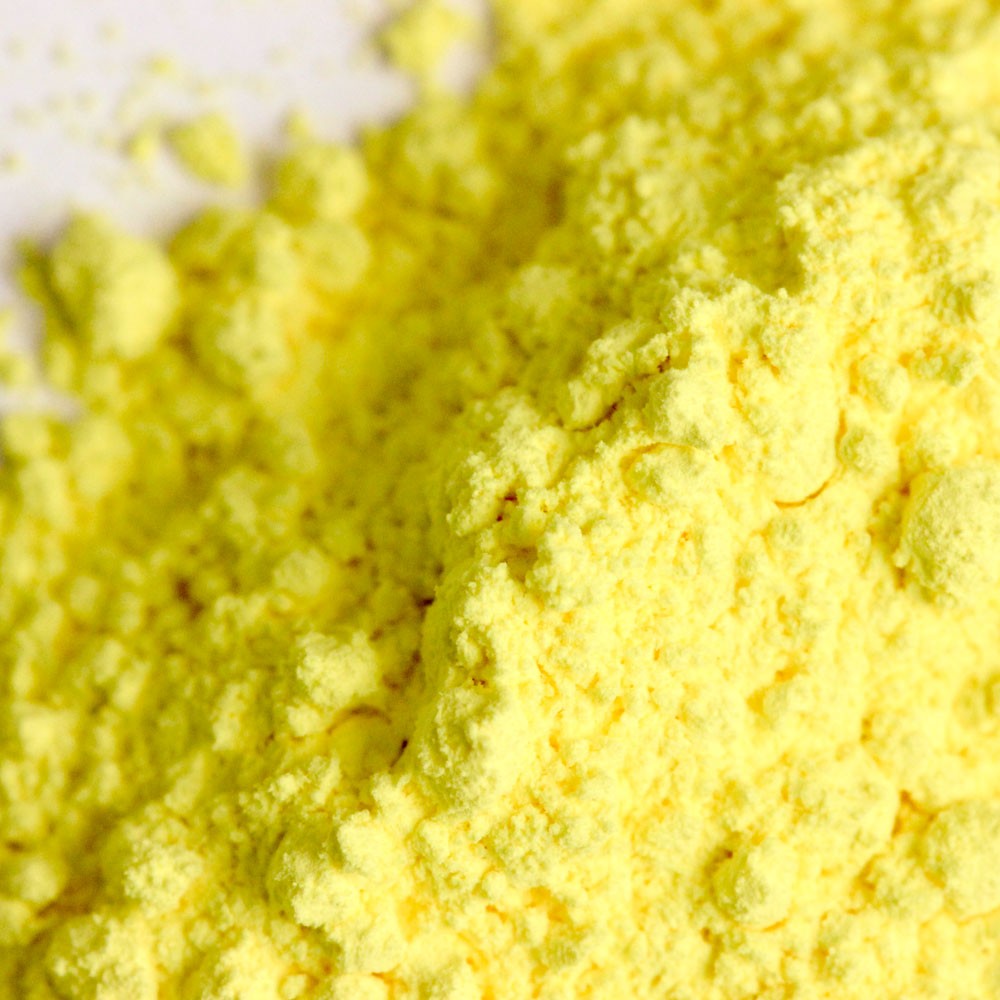
Fig. 6 — A colored dry blend at close range. The tone is carried inside the powder; what covers a base like this is absorbing color, not luster.
The operational consequence is that whiteness is the enemy in this product. You are not adding sparkle on top of white; you are covering white. That is a job for hiding power — absorbing color, matte tones, higher-opacity pigments — and not a job for luster. A formulator who reaches for the shiniest grade to beat a white base is buying the one property the substrate cannot preserve.
Luster still earns its place in a bath bomb, but as a top note over color you have already laid down, not as the thing that makes the ball read as colored. Where the two jobs get confused, the ball looks right under the lamp and the tub looks empty.
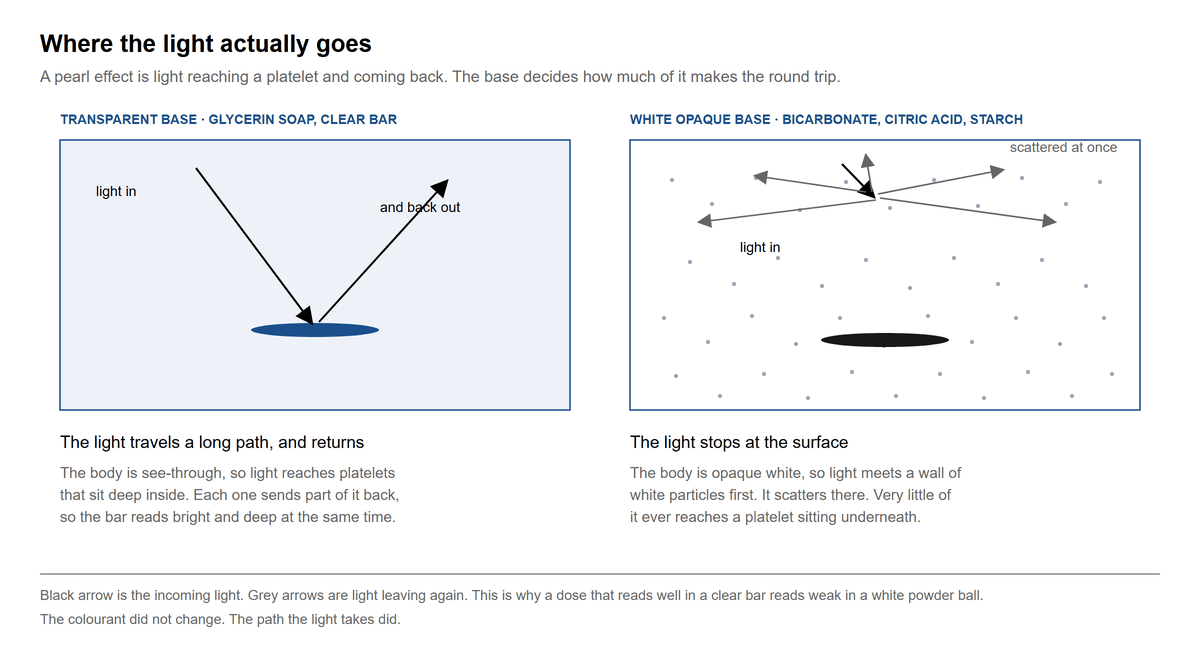
Fig. 7 — Left: light entering a clear base and returning from depth. Right: the same light scattered off a white powder surface.
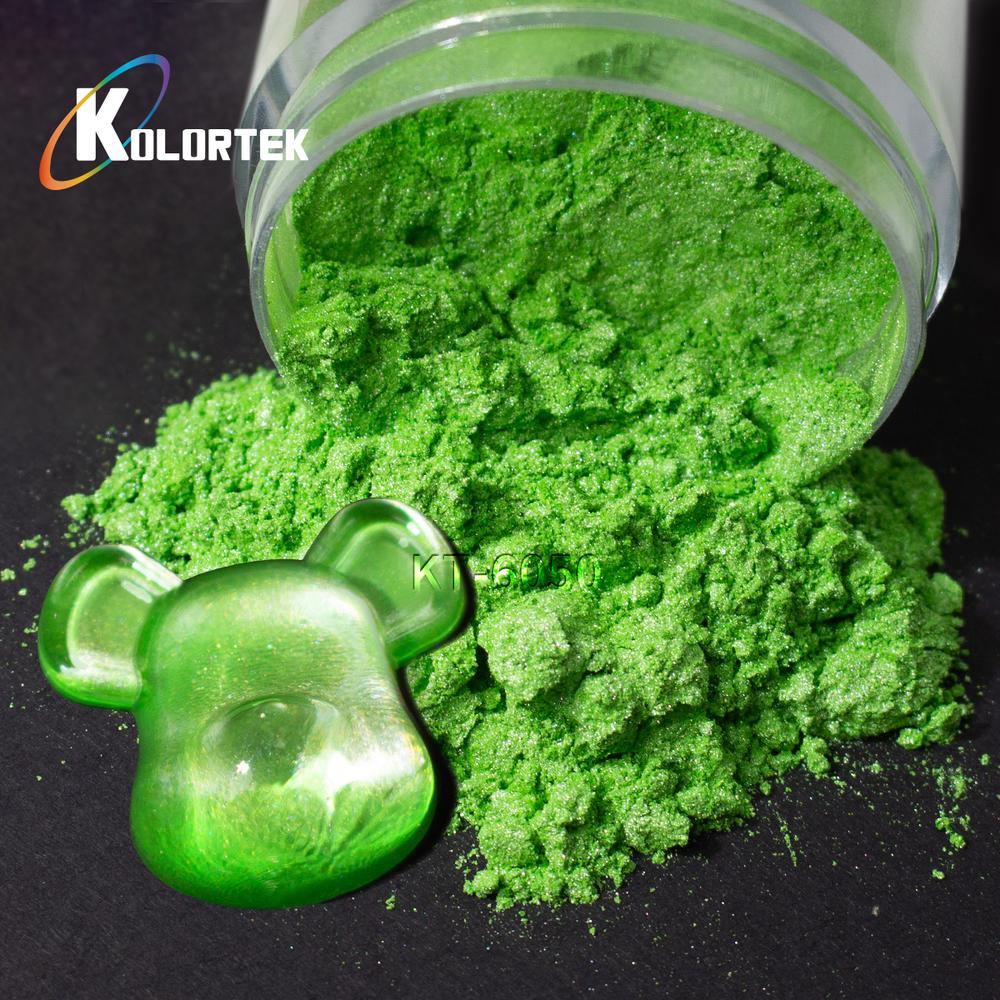
Fig. 8 — One green pearl powder in two states: a loose pile, and locked inside a clear glycerin piece. The clear piece still throws light back.
If you are carrying a soap line and adding bath bombs beside it, the base formulation side is covered on our soaps and bath products page, and the color comparison for the soap half sits with cold-process soaps. The dividing line is simple: same material, different medium, different dose. For the golds and coppers that most bath-bomb briefs actually ask for, the metal luster series is the relevant shelf.
Cosmetic colorant permissions are written per color additive, not per category. A document headed "cosmetic grade" has told you the material is intended for cosmetic use and almost nothing about which cosmetic use. Permitted use level, body area, and whether mucosal contact is contemplated are all set additive by additive.
So read a supplier file as a list of named uses rather than a stamp. External use, general use, and uses that contemplate mucosal contact sit at different points on that list, and a bath bomb is not at the mild end of it. It is a rinse-off product whose entire function is to hold a dilute solution of everything in the ball against skin and mucosa for the length of a bath.
The conclusion is not that a particular color is prohibited in bath bombs. It is that you cannot inherit a use level from a different product category, and you cannot inherit one from a blanket label. Match the file against the use you actually ship, one color additive at a time.
There is a second, more mundane failure with the same symptom. Water in the formula — a spray bottle to damp the mix, wet hands at the press, a humid filling room — starts the bicarbonate–citric acid reaction early. Weeks later the ball shows surface spots and mottled color. That is the ball degrading, not the pigment. Excess acid and excess base each leave their own residue behind, and neither residue is a colorant defect.
Our own paperwork is narrow by design. Certificates other than ISO 9001 are provided on request, and ISO 9001 is the only one we describe as certified.
The ring around the waterline is not evidence of a poor grade. It is what happens when three things are present at once: an insoluble platelet, an oil phase that can act as a binder, and hard water that deposits calcium and magnesium salts.
Mica does not dissolve — the same property that makes it settle instead of tinting. Formula oils and butters wet the platelet and hold it against the enamel. Hard water adds soap scum, and the scum and the platelets come out of suspension together. Any one of the three alone is manageable. Together they build a film that needs mechanical wiping.
The industry answer is an emulsifier — polysorbate 80 and its relatives. A nonionic surfactant solubilizes the oil phase so it disperses into the water with the platelets carried along, and the whole load leaves with the drain instead of plating out on the wall. That is a formulation action. It is not a pigment substitution, and no pigment choice reproduces it.
We will not print a percentage for it. Published starting ranges in this application are wide enough that any single figure we gave would function as a promise, and we have not run trials on your formula. Add it, then test it on your base, at your oil load, in your water hardness.
Which means the action "change the pigment" does not solve the ring. The ring is a dispersion problem, and dispersion is set by the emulsifier and the oil phase, not by which mica you bought.
Before any color conversation: tub volume in liters, single ball weight in grams, the selling point you are building toward, and the documents your market requires. That is four items, and color is the fifth — the only one that gets easier once the other four are fixed.
The order matters because the first two numbers set the dose and the third eliminates half the material options. A brief that opens with a color chip and works backward produces a ball that photographs well and a tub that disappoints, which is the exact failure this page exists to prevent.
"Water that visibly changes color" and "a tub that wipes clean in one pass" are different products with different ingredient lists. Naming the one you are selling is a bigger decision than any shade card, and it costs nothing to make early and a great deal to make after the first container ships.
How much mica goes into one bath bomb?
There is no standard value, because the answer is a function of tub volume rather than of ball weight. Work it backward: pick the concentration you want in the tub, multiply by the tub's water mass, and that gives the pigment mass the whole ball has to carry. For 13 mg/L in a 150 L tub that is about 2 g per ball — 2 % of a 100 g ball. Change the tub and the number moves with it.
Why did my bath bomb not color the water?
Because mica does not dissolve. It gives flash, not tint, and once the platelets settle the water above them is close to clear. A visible change in the body of the water requires a material that goes into solution; that is a different product decision, not a larger scoop.
Can I use the same mica I use in cold-process soap?
The material can be the same batch. The loading basis and the visual expectation cannot. Soap is not diluted — the bar is the product. A bath bomb is diluted about 1,500 times before anyone judges it. Soap is also a light-transmitting medium and the bath bomb base is opaque white powder, so the same percentage does not produce the same appearance in the two products.
Will it stain the tub?
Insoluble materials can leave marks, and mica is insoluble. The usual industry measure is an emulsifier that helps the oil phase and the platelets rinse away with the water. That reduces the problem; it does not remove it, and no supplier can guarantee a tub will stay unmarked. If a customer requires that guarantee, the honest answer is that the requirement points away from pearl.
Send the tub volume, the ball weight, the selling point, and the document list, and the quote follows from those four. Pricing is by quantity and specification. Catalog #28, Pearls For Cosmetics, collects the cosmetic pearl range in a single file: download the catalog.

 Deutsch
 English
 Français
 Русский
 Español
 Português